Common Electrical Findings in Denver Home Inspections
Common Electrical Findings in Home Inspections
Electrical findings are among the most common issues noted during home inspections. Some are minor repair items. Others involve safety concerns, outdated equipment, improper modifications, or conditions that may require further evaluation by a licensed electrician.
The challenge with electrical systems is that they can appear functional even when underlying concerns are present. Lights may turn on, outlets may work, and appliances may operate normally, but that does not always mean the system is properly installed, adequately protected, or performing safely under fault conditions.
A home’s electrical system is designed to do more than provide power. It is also designed to protect the structure and occupants from shock, overheating, and fire. When wiring, panels, breakers, grounding, or protective devices do not function as intended, the risk profile of the home changes.
In Denver and along the Front Range, electrical findings are often influenced by the age of the home, previous remodeling, older wiring methods, outdated panels, unfinished basement work, and decades of homeowner or handyman modifications. Older Denver homes may also contain legacy systems such as knob-and-tube wiring, fuse panels, ungrounded receptacles, Federal Pacific panels, or Zinsco panels, all of which require careful interpretation. Your existing articles on Federal Pacific/Zinsco panels and knob-and-tube wiring already explain why age alone is not the only issue; reliability, modifications, compatibility, and safety performance matter more.
A standard home inspection is visual and non-invasive. Inspectors do not disassemble electrical systems or perform load testing, but they can identify visible defects, safety concerns, outdated equipment, and conditions that deserve further evaluation.
Key Takeaways
Electrical findings are common because home electrical systems age, get modified, and often need to support loads they were not originally designed for.
A system can appear functional while still having safety concerns.
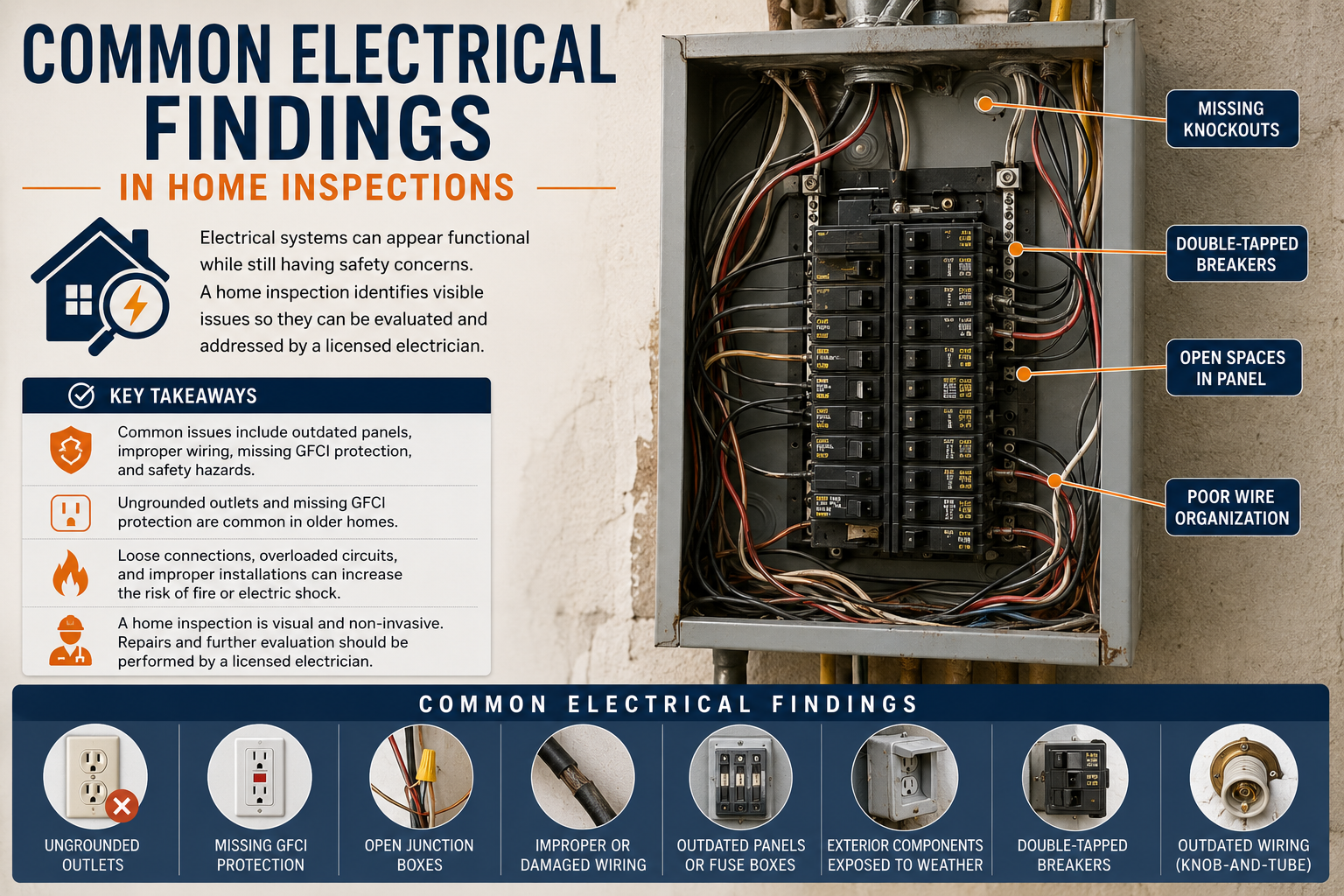
Common findings include missing GFCI protection, ungrounded outlets, double-tapped breakers, open junction boxes, improper wiring, outdated panels, and water exposure near electrical components.
Older Denver homes may contain legacy wiring or panel types that require more cautious evaluation.
A home inspection identifies visible electrical concerns, but licensed electricians are needed for repair, troubleshooting, or invasive evaluation.
Why electrical issues are common during inspections
Electrical systems are often changed many times over the life of a home.
A house may have started with a small fuse panel and limited circuits, then later received additional outlets, kitchen appliances, air conditioning, finished basement wiring, exterior lighting, garage circuits, and modern electronics.
Each change creates an opportunity for improper installation.
Common sources of electrical findings include:
Aging equipment
Outdated wiring methods
Homeowner repairs
Poor remodel work
Improperly finished basements
Added circuits without proper labeling
Missing safety protection
Overloaded or poorly configured panels
Exterior components exposed to weather
Old systems adapted to modern electrical loads
In many cases, the issue is not that one component suddenly failed. It is that the electrical system has gradually been changed over decades without a consistent, code-compliant upgrade strategy.
Electrical panels and service equipment
The electrical panel is one of the most important components evaluated during a home inspection. It distributes power throughout the home and contains overcurrent protection devices, such as breakers or fuses, that are designed to protect wiring from overheating.
Common panel findings include:
Missing panel directory labels
Open breaker slots
Missing knockouts
Double-tapped breakers
Oversized breakers
Rust or corrosion
Scorching or overheating signs
Poor wire organization
Missing panel cover screws
Improper bonding or grounding
Obsolete or recalled panel types
Insufficient working clearance
Not every panel finding carries the same level of concern. A missing circuit label is a lower-priority maintenance item. Evidence of overheating, corrosion, improper wiring, or an outdated high-risk panel type deserves more attention.
Double-tapped breakers
A double-tapped breaker occurs when two conductors are connected to a breaker terminal designed for only one conductor.
This is a common inspection finding.
The concern is that the terminal may not properly secure both wires. A loose connection can create resistance, heat, arcing, or intermittent power issues.
Some breakers are designed and listed to accept two conductors, but many are not. Determining whether a double tap is acceptable depends on the specific breaker type and manufacturer.
When improper double tapping is observed, correction by a licensed electrician is typically recommended.
Missing knockouts and open panel gaps
Electrical panels are designed to contain energized components and prevent accidental contact.
When breaker openings, knockouts, or gaps are left open, there may be exposed access into the panel interior. This can create shock hazards and allow pests, dust, or debris into the enclosure.
These conditions are often simple to correct, but they are still important because the panel should remain properly enclosed.
Rust or corrosion in electrical panels
Moisture and electrical equipment do not mix well.
Rust or corrosion inside a panel may indicate past or ongoing water entry. This can occur from exterior service equipment, roof leaks, condensation, plumbing leaks, basement moisture, or improper cable penetrations.
Corrosion can affect breaker performance, bus bar condition, and electrical connections.
If corrosion is present, the concern is not only what is visible. The more important issue is whether internal components have been compromised. Because inspectors do not disassemble breakers or test internal panel reliability, further evaluation by a licensed electrician is usually appropriate when corrosion is significant.
Outdated or problematic panel types
Some older electrical panels are flagged not because of visible damage, but because of known reliability concerns.
Federal Pacific Electric and Zinsco panels are two of the most common examples encountered in Colorado homes. These panels may still appear functional during an inspection, but the concern is how they perform under fault conditions. With FPE panels, the concern involves inconsistent breaker tripping. With Zinsco panels, the concern often involves poor breaker-to-bus connections, overheating, or breakers that may appear off while circuits remain energized.
This distinction is important. The issue is not simply that the panel is old. The issue is uncertainty about whether the safety devices will respond properly when needed.
Because that performance cannot be reliably verified during a standard visual inspection, identification of these panel types typically leads to a recommendation for further evaluation and likely replacement.
Fuse panels
Fuse panels are still found in some older homes.
A properly configured fuse system can provide overcurrent protection, but many fuse panels have been altered, overloaded, or poorly maintained over time.
Common concerns include:
Oversized fuses
Loose fuse holders
Limited circuit capacity
Poor labeling
Improper repairs
Evidence of overheating
Lack of modern safety protection
Insurance limitations
One important concern is overfusing. This occurs when a fuse with a higher amperage rating is installed on a circuit than the wiring is designed to handle. In that situation, the wiring may overheat before the fuse responds.
Fuse panels are especially common in homes with older wiring methods, including knob-and-tube wiring. In those homes, fuse sizing and circuit loading deserve careful attention.
Knob-and-tube wiring
Knob-and-tube wiring is one of the most recognizable older wiring systems found in Denver’s historic housing stock.
It was widely used from the late 1800s through the early 20th century and was designed around lower electrical loads than modern homes require.
The presence of knob-and-tube wiring does not automatically mean a home is unsafe. The condition of the wiring, how it has been modified, whether it has been buried in insulation, and how much electrical load it carries are more important than age alone.
Common concerns include:
Brittle or damaged insulation
Improper splices
Lack of grounding
Active wiring buried in insulation
Overfusing
Hidden modifications
Insurance complications
Knob-and-tube wiring often becomes more concerning when it has been partially updated. Transitions between old and modern wiring are common locations for defects.
Ungrounded receptacles
Many older homes were built before grounded three-prong receptacles became standard.
An ungrounded receptacle may still power a lamp, phone charger, or appliance, but it does not provide the same safety path as a properly grounded outlet.
Common findings include:
Two-prong receptacles
Three-prong receptacles with no ground
Open grounds
Bootleg grounds
Inconsistent grounding after partial updates
A three-prong outlet does not guarantee that grounding is present. This is why receptacle testing is important during inspections.
Ungrounded wiring may affect appliance safety, surge protection, electronics, and buyer expectations. Correction options depend on the wiring method, circuit configuration, and whether GFCI protection is added as an approved alternative in certain situations.
GFCI protection issues
Ground-fault circuit interrupter protection, commonly called GFCI protection, is one of the most common electrical findings during inspections.
GFCI devices are designed to reduce shock risk by shutting off power when they detect current leaking from the intended path.
GFCI protection is especially important in areas where electricity and moisture are likely to be close together.
Common locations include:
Bathrooms
Kitchens
Garages
Exterior outlets
Crawlspaces
Basements
Laundry areas
Wet bars
Utility rooms
Areas near sinks
Common GFCI findings include:
Missing GFCI protection
GFCI devices that do not trip
GFCI devices that do not reset
Exterior outlets without proper protection
Older kitchen or bathroom outlets lacking modern protection
Poorly wired GFCI devices
GFCI requirements have expanded over time, so older homes may not have protection in all locations where it would be expected today. From a practical safety standpoint, adding GFCI protection is often a reasonable improvement even when the home complied with older standards at the time it was built.
AFCI protection issues
Arc-fault circuit interrupter protection, or AFCI protection, is designed to reduce the risk of fires caused by certain types of electrical arcing.
AFCI protection is more common in newer homes and is typically located at the breaker panel.
During inspections, AFCI findings may include:
Missing AFCI protection in areas where expected
AFCI breakers that do not test properly
Nuisance tripping complaints
Inconsistent protection after remodel work
Like GFCI protection, AFCI requirements have expanded over time. Older homes may not have AFCI protection unless circuits have been upgraded.
When AFCI concerns are observed, further evaluation by an electrician may be appropriate, especially if breakers trip repeatedly or fail to respond to test functions.
Open junction boxes and exposed wiring
Electrical splices should be contained inside approved junction boxes with covers.
Open splices are a common inspection finding in attics, crawlspaces, garages, unfinished basements, and mechanical areas.
Common concerns include:
Wire splices outside junction boxes
Missing junction box covers
Exposed conductors
Unsupported wiring
Improper wire connectors
Abandoned wiring that may still be energized
These defects are common after remodels, fixture replacements, or homeowner repairs.
The risk is that exposed wiring can be damaged, overheated, contacted accidentally, or become a fire or shock hazard.
Improper wiring in unfinished basements and garages
Finished and partially finished basements are frequent locations for electrical defects.
Basement remodels may include added outlets, lighting, laundry circuits, bathroom wiring, wet bar wiring, or entertainment systems. If this work was done without proper permits or qualified installation, defects are common.
Typical findings include:
Unprotected wiring
Open junction boxes
Improper recessed lighting installation
Missing GFCI protection
Poorly supported cables
Extension cords used as permanent wiring
Overloaded circuits
Improper wiring near plumbing
Missing covers on outlets or switches
Garages present similar concerns, especially where workshops, refrigerators, freezers, EV chargers, or power tools have been added.
Extension cords used as permanent wiring
Extension cords are intended for temporary use. They are not a substitute for permanent wiring.
During inspections, extension cords may be found powering garage appliances, sump pumps, freezers, workshop equipment, exterior lights, or basement fixtures.
Common concerns include:
Cords run through walls, ceilings, or doors
Cords buried under rugs or finishes
Overloaded power strips
Daisy-chained cords
Cords used for permanent appliances
Damaged or undersized cords
These conditions can create overheating and fire hazards. If permanent power is needed, a proper receptacle or dedicated circuit should be installed.
Reversed polarity and miswired receptacles
Receptacles can be wired incorrectly and still appear to function.
Common defects include:
Reversed polarity
Open grounds
Open neutrals
Hot/ground reversals
Loose outlets
Damaged receptacles
Missing cover plates
Reversed polarity occurs when the hot and neutral conductors are connected to the wrong terminals. This can create shock risk because parts of a device may remain energized even when switched off.
These defects are usually simple for an electrician to correct, but they are still important safety findings.
Exterior electrical findings
Exterior electrical components are exposed to weather, temperature changes, sunlight, snow, irrigation, and physical damage.
Common exterior electrical findings include:
Missing weather-resistant outlet covers
Missing GFCI protection
Damaged exterior receptacles
Improper conduit installation
Exposed wiring
Low-voltage wiring mixed with line-voltage wiring
Poorly installed exterior lighting
Loose service mast components
Vegetation interfering with service equipment
Improper clearances around overhead service wires
In Colorado, snow, freeze-thaw cycles, and irrigation overspray can accelerate deterioration of exterior electrical components.
Exterior outlets should be properly rated, protected, and covered to reduce shock and moisture-related risks.
Electrical concerns in attics and crawlspaces
Attics and crawlspaces often contain hidden electrical issues because they are less visible during daily use.
Common findings include:
Open splices
Loose wiring
Wiring damaged by pests
Wiring buried beneath insulation
Improperly supported cables
Junction boxes hidden under insulation
Unsafe lighting fixtures
Old knob-and-tube wiring
Wiring in contact with ductwork or sharp framing edges
Attics are especially important in older Denver homes where past insulation upgrades may have covered active knob-and-tube wiring. Since knob-and-tube wiring was designed to dissipate heat in open air, insulation contact changes the way the system performs.
Recessed lighting issues
Recessed lights are common in remodeled homes and finished basements.
Common concerns include:
Fixtures not rated for insulation contact
Missing covers in attic spaces
Overheating signs
Poor clearances to insulation
Improper wiring connections
Air leakage into attics
Older recessed fixtures can also contribute to attic air leakage, which may affect energy performance and moisture movement. In Colorado homes, attic air leakage is already a known contributor to attic moisture and ice damming concerns.
Smoke alarms and carbon monoxide alarms
Smoke and carbon monoxide alarms are life safety devices, and they are commonly noted during inspections.
Common findings include:
Missing alarms
Alarms beyond expected service life
Missing carbon monoxide alarms near sleeping areas
Improper placement
Disconnected alarms
Painted or damaged alarms
No visible interconnection where expected
Requirements vary by age of the home and local standards, but from a safety standpoint, properly located and functional alarms are important in every home.
Inspectors typically do not certify alarm systems, but missing or visibly outdated devices are commonly reported.
Electrical bonding and grounding concerns
Grounding and bonding help stabilize the electrical system and provide safer pathways for fault current.
Common concerns include:
Missing grounding electrode conductor
Loose grounding connections
Improper bonding at metal piping
Missing bonding at gas piping where required
Improper subpanel bonding
Neutral and ground wires incorrectly connected
Multiple bonding points in the wrong locations
These issues can be technical and are often not fully visible during a standard inspection. When grounding or bonding defects are suspected, further evaluation by a licensed electrician is appropriate.
Subpanel defects
Subpanels are commonly found in garages, basements, additions, workshops, and detached structures.
Common subpanel findings include:
Neutrals and grounds bonded together improperly
Missing four-wire feeder where required
Improper labeling
Open knockouts
Poor working clearance
Oversized breakers
Improper grounding electrode system at detached buildings
Subpanel defects are common after additions or remodels. They can affect both safety and system performance.
Aluminum branch wiring
Some homes built during the 1960s and 1970s may contain solid aluminum branch circuit wiring.
This is different from the larger aluminum service entrance conductors commonly used in many homes.
The concern with older solid aluminum branch wiring is that it expands and contracts differently than copper and can loosen at connections if not properly terminated. Loose connections can overheat.
Common concerns include:
Aluminum wiring at receptacles or switches
Incompatible devices
Evidence of overheating
Improper splices to copper wiring
Lack of approved repair methods
When aluminum branch wiring is identified, evaluation by an electrician familiar with approved repair methods is usually recommended.
Solar, EV chargers, and modern electrical loads
Newer electrical additions can also create inspection findings.
Solar systems, electric vehicle chargers, battery systems, hot tubs, and high-demand appliances place additional demands on electrical systems.
Common concerns include:
Poor labeling
Improper disconnects
Inadequate panel capacity
Unpermitted installations
Exposed wiring
Poor conduit routing
Missing warning labels
Improper breaker sizing
Incomplete documentation
These systems are often beyond the scope of a basic visual inspection, but visible installation concerns can still be identified.
As homes add more electrical loads, panel capacity and installation quality become increasingly important.
What does not automatically mean the electrical system is unsafe
Not every electrical finding indicates an immediate hazard.
For example:
An older panel may be functional but outdated.
An ungrounded outlet may reflect the age of the wiring system.
A missing label may be a maintenance issue rather than a safety defect.
A home without AFCI protection may simply predate modern requirements.
A fuse panel may function properly if correctly configured and maintained.
The key is context.
Electrical findings should be evaluated based on risk, location, age, condition, installation quality, and whether safety protection is present.
When further evaluation is recommended
Further evaluation by a licensed electrician is commonly recommended when:
Federal Pacific or Zinsco panels are present
Significant corrosion or overheating is observed
Breakers are double-tapped improperly
Aluminum branch wiring is identified
Knob-and-tube wiring is active
Open splices or exposed wiring are present
Frequent tripping or flickering is reported
Panel capacity appears inadequate
Grounding or bonding concerns are observed
Electrical work appears unpermitted or improperly modified
Water exposure has affected electrical equipment
Further evaluation does not always mean major replacement is required. It provides clarity about the condition of the system and the safest correction strategy.
What a standard home inspection can and cannot determine
A standard home inspection evaluates visible and accessible electrical components.
Inspectors commonly review:
Service entrance components
Main panel and subpanels
Visible wiring
Representative outlets
Switches and fixtures
GFCI and AFCI protection where accessible
Electrical safety concerns
Smoke and carbon monoxide alarms
Exterior electrical components
However, a home inspection does not typically include:
Load calculations
Disassembly of breakers
Hidden wiring evaluation inside walls
Verification of every outlet
Destructive testing
Full code compliance review
Certification of solar or specialty systems
Repair recommendations beyond general direction
This distinction matters because electrical systems contain many concealed components. Inspection findings often identify visible issues and risk indicators rather than every possible defect.
Inspector Insight
During home inspections, electrical systems often reveal the history of the house.
Older Denver homes may show layers of electrical updates: original wiring, partial rewiring, added grounded outlets, basement circuits, new kitchen wiring, older fuse equipment, and newer panel additions. The result is often a mixed system rather than a fully modernized one.
One of the most common misunderstandings is assuming that working power means safe wiring. Electrical systems are designed to protect occupants during abnormal conditions, not just function during normal use. The real test is how the system responds when something goes wrong.
This is why certain findings matter even when the home appears to operate normally. A Federal Pacific panel may power the home, but the concern is breaker reliability under fault conditions. Knob-and-tube wiring may still operate, but the concern is insulation condition, modifications, loading, and whether it has been buried. Ungrounded outlets may power devices, but they do not provide the same protection as modern grounded circuits.
From an inspection standpoint, the goal is not to create alarm. It is to identify where the electrical system no longer aligns with modern safety expectations or where further evaluation is needed.
Practical implications for homeowners and buyers
For homeowners, electrical maintenance should focus on safety, modernization, and preventing hidden hazards. Repairing open junction boxes, adding GFCI protection, replacing damaged exterior outlets, maintaining proper panel covers, and evaluating older wiring can significantly improve safety.
For buyers, electrical findings should be interpreted by severity. A missing outlet cover is very different from an obsolete panel, active knob-and-tube wiring, or significant panel corrosion. Understanding the difference helps buyers prioritize repairs and budget realistically.
For agents, electrical findings are common and often manageable, but they can affect negotiation, insurance, and transaction timelines. Older panel types, knob-and-tube wiring, aluminum branch wiring, and major safety concerns should be discussed early so buyers understand the implications.
The bottom line
Electrical findings are common during home inspections because electrical systems age, get modified, and must support changing household demands over time.
Some findings are simple repairs. Others involve outdated equipment, safety protection, hidden wiring concerns, or panel reliability issues that deserve further evaluation.
In Denver and along the Front Range, older homes frequently contain a mix of original wiring and later updates. That mix requires careful interpretation.
A home inspection helps identify visible electrical concerns and safety risks, but licensed electricians are needed for detailed diagnosis and repair. The most important goal is understanding which findings are routine maintenance and which affect the system’s ability to protect the home and its occupants.
Author
Andrew Sams is the founder of Alpine Building Performance, a Denver based residential and commercial inspection firm. He holds a B.S. in Building Science and has over 15 years of experience in building diagnostics, energy auditing, and property condition assessment.
Andrew is a Certified Master Inspector (CMI), Certified Commercial Property Inspector (CCPI), and Radon Measurement Specialist. He was named the Denver Metro Association of Realtors 2022 Industry Partner of the Year and teaches continuing education courses for real estate professionals throughout Colorado.