Common Plumbing Issues Found During Home Inspections in Denver, Colorado
Common Plumbing Issues Found During Home Inspections
Plumbing systems are easy to take for granted until something leaks, backs up, corrodes, or stops draining properly. During a home inspection, plumbing concerns are among the most common findings because the system includes so many components working together behind walls, below floors, under sinks, inside mechanical rooms, and underground.
Some plumbing issues are minor maintenance items. Others can lead to water damage, mold growth, sewer backups, high utility costs, or expensive repairs.
The challenge is that plumbing problems are not always obvious during a showing or walkthrough. A sink may drain, a toilet may flush, and hot water may be available, yet hidden concerns may still exist. Older piping materials, improper repairs, slow leaks, poor water pressure, aging water heaters, and sewer line defects can all affect how the system performs over time.
In Denver and along the Front Range, plumbing conditions are also influenced by the age of the home, seasonal freeze risk, expansive soils, older sewer infrastructure, water quality, and the way homes have been remodeled over many decades.
A home inspection does not involve opening walls or performing destructive testing, but it can identify visible defects, performance concerns, and conditions that deserve further evaluation.
Key Takeaways
Plumbing issues are common during home inspections because the system includes supply piping, drain piping, fixtures, water heaters, shutoff valves, vents, and underground sewer lines.
Small leaks can create significant damage if they go unnoticed.
Older Denver homes may contain aging galvanized steel, cast iron, clay tile, Orangeburg, or other legacy plumbing materials.
Water heater age, installation quality, venting, safety controls, and leakage are important inspection concerns.
A standard home inspection evaluates visible plumbing components, but buried sewer lines require a separate sewer scope inspection.
Many plumbing issues are manageable when identified early, but deferred maintenance can lead to larger repair costs.
Why plumbing issues are so common
Plumbing systems are used every day. They handle pressurized water, hot water, wastewater, drainage, venting, and fixture operation. Because of that constant use, even small defects can become meaningful over time.
A home’s plumbing system typically includes:
Water service piping
Interior water distribution piping
Drain, waste, and vent piping
Plumbing fixtures
Toilets, tubs, showers, and sinks
Water heater equipment
Shutoff valves
Hose bibbs
Sump pumps or ejector pumps where present
Sewer or septic connections
Each part of the system can age, leak, clog, corrode, or be modified incorrectly.
In older homes, plumbing systems are often a mix of original materials and later updates. A home may have modern copper or PEX piping in one area, older galvanized piping in another, cast iron drains below the basement slab, and a partially replaced sewer line outside.
That mix of materials often tells the story of how the home has changed over time.
Supply piping concerns
Water supply piping delivers pressurized water to fixtures and appliances. During an inspection, visible supply piping is evaluated for material type, leakage, corrosion, support, and general condition.
Common concerns include:
Corrosion at pipe joints
Leaking fittings
Unsupported piping
Dissimilar metal connections
Outdated pipe materials
Low water pressure
Poor repairs
Missing or inaccessible shutoff valves
The type of pipe material matters because different materials age in different ways.
Galvanized steel piping
Galvanized steel piping is commonly found in older homes. It was widely used before copper and modern plastic piping became more common.
The issue with galvanized piping is internal corrosion. Over time, the inside of the pipe can become restricted by rust and mineral buildup. From the outside, the pipe may appear intact, while the interior opening becomes increasingly narrow.
Common signs of aging galvanized piping include:
Reduced water pressure
Rust-colored water
Uneven flow between fixtures
Corrosion at threaded joints
Leaks near fittings
Difficulty operating old valves
Galvanized piping does not always require immediate replacement, but its presence often indicates that future upgrades should be expected.
Copper piping
Copper piping has been widely used for decades and is generally durable when properly installed. However, copper systems can still develop problems.
Common copper piping concerns include:
Corrosion or green staining at joints
Poor solder joints
Leaks at fittings
Contact with incompatible metals
Unsupported horizontal runs
Pin-hole leaks
Damage from freezing
Copper piping is often a reliable material, but installation quality, water chemistry, and age all influence performance.
PEX and modern plastic piping
PEX piping is common in newer homes and remodeled plumbing systems. It is flexible, resistant to many corrosion issues, and easier to route through framing than rigid piping.
Inspection concerns with PEX usually relate more to installation than the material itself.
Common issues include:
Improper support
Sharp bends or kinks
Missing protective plates where piping passes through framing
Poorly installed fittings
Exposure to sunlight in unfinished areas
Incomplete or inconsistent retrofit work
PEX is often a good material, but like any plumbing system, it still depends on proper installation.
Drain, waste, and vent piping
Drain, waste, and vent piping removes wastewater from the home and allows air into the system so fixtures drain properly.
Drainage problems are common inspection findings because defects may develop slowly. A drain may still work, but signs of trouble can appear in the form of slow drainage, gurgling, sewer odors, staining, or corrosion.
Common drain piping concerns include:
Leaks below sinks
Improper slope
Corroded piping
Poorly supported drains
Improper traps
Missing or incorrect venting
Unapproved flexible drain connections
Evidence of past leakage
Slow-draining fixtures
Drainage systems rely on both gravity and venting. When either is wrong, performance problems can follow.
Cast iron drain piping
Cast iron drain piping is common in older and mid-century homes. It is strong and long-lasting, but it does not last forever.
Over time, cast iron can corrode from the inside. The pipe may develop rough interior surfaces, scaling, restricted flow, or leakage. Horizontal cast iron piping is often more vulnerable because wastewater can sit in low areas.
Common signs of aging cast iron include:
Rust staining
Flaking or scaling pipe surfaces
Leaks at joints
Sewer odors
Slow drains
Evidence of patch repairs
Deterioration near the bottom of horizontal runs
Cast iron defects are not always fully visible during a standard inspection, especially where piping is concealed below slabs or behind finished walls. When older cast iron is present, further evaluation may be appropriate if symptoms or visible deterioration are observed.
Improper drain traps and under-sink repairs
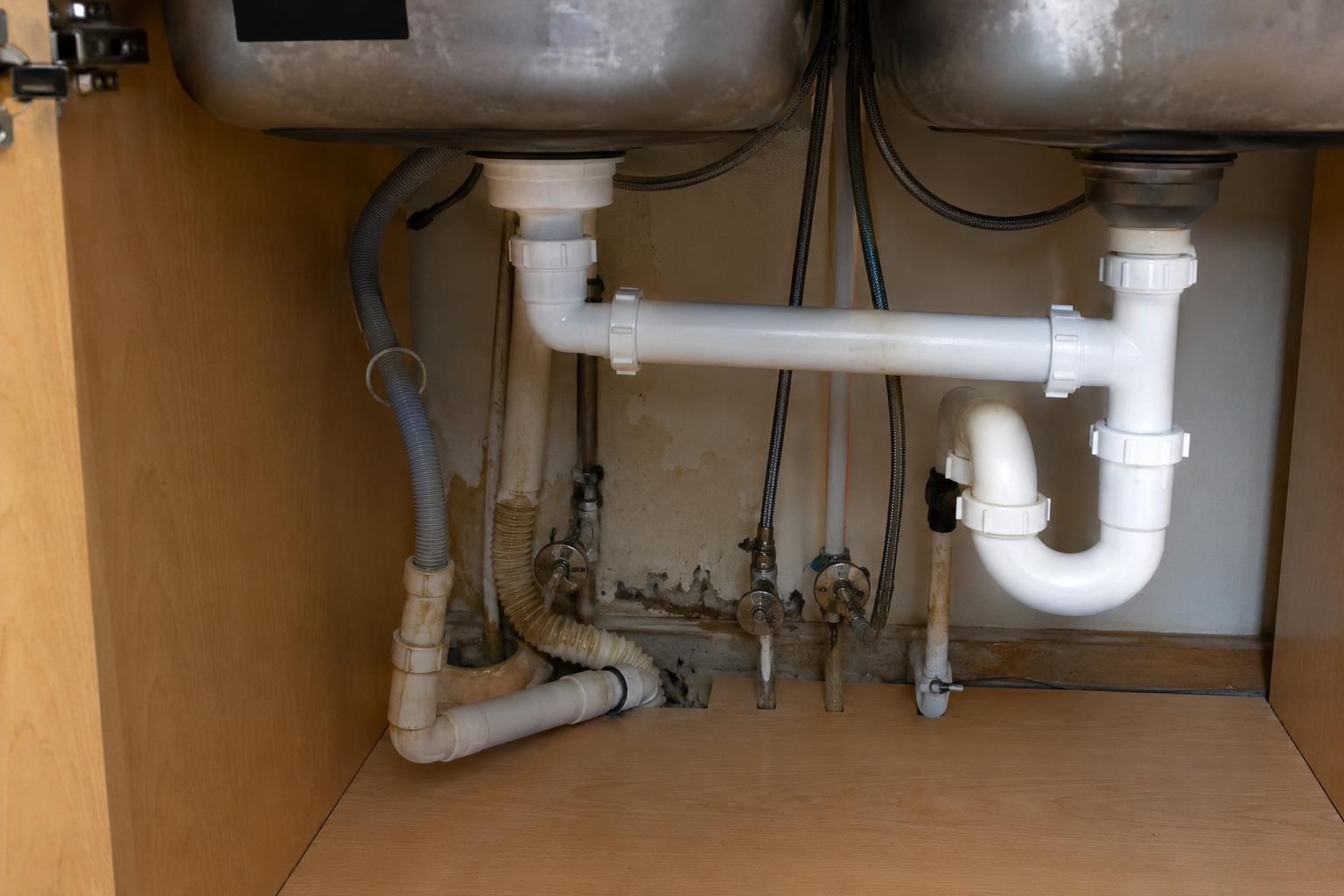
Some of the most common plumbing issues are found below sinks.
These areas are frequently modified by homeowners, handymen, or during appliance upgrades. Because they are accessible, they often accumulate makeshift repairs over time.
Common under-sink findings include:
Loose drain fittings
Leaking P-traps
Improper S-traps
Flexible accordion-style drain piping
Missing trap seals
Poor dishwasher drain connections
Corrosion at supply valves
Water staining inside cabinets
An under-sink leak may seem minor, but repeated moisture can damage cabinets, flooring, drywall, and framing. It can also create conditions that support mold growth.
Toilet concerns
Toilets are simple fixtures, but they are a frequent source of inspection findings.
Common toilet issues include:
Loose toilets
Leaks at the base
Failed wax rings
Running toilets
Weak flushing
Cracked tanks or bowls
Missing caulking at the base
Improper clearance
Moisture damage to nearby flooring
A loose toilet is more than an annoyance. Movement at the base can break the wax seal, allowing wastewater or sewer gases to escape. Over time, leakage around a toilet can damage subflooring and finish materials.
In bathrooms with older tile floors, a toilet leak may be hidden until the floor becomes soft, stained, or visibly damaged.
Faucet, fixture, and valve problems
Many plumbing issues involve ordinary wear at fixtures and valves.
Common findings include:
Dripping faucets
Leaking shower valves
Loose fixtures
Corroded shutoff valves
Valves that do not operate
Missing handles
Leaking hose bibbs
Poor water flow
Reversed hot and cold controls
Shutoff valves are especially important. A fixture shutoff valve that leaks or cannot be operated may not seem urgent until a fixture needs repair or a leak occurs.
Main water shutoff valves should also be accessible and functional. During an emergency, being able to quickly shut off water can significantly reduce damage.
Water pressure issues
Water pressure that is too low can make a plumbing system inconvenient. Water pressure that is too high can damage fixtures, valves, appliances, and piping over time.
High water pressure can contribute to:
Leaking valves
Water heater stress
Toilet fill valve failures
Washing machine hose failures
Pipe noise
Premature fixture wear
In many homes, a pressure reducing valve is installed to control incoming water pressure. These valves can fail or drift out of adjustment over time.
Low water pressure may be caused by older piping, partially closed valves, fixture restrictions, municipal supply conditions, pressure regulator problems, or internal pipe corrosion.
When pressure appears abnormal, further evaluation by a licensed plumber may be appropriate.
Water heater issues
Water heaters are one of the most important plumbing components evaluated during an inspection.
Common water heater concerns include:
Age near or beyond expected service life
Active leakage
Rust or corrosion
Improper venting
Missing or incorrect temperature and pressure relief valve discharge piping
Inadequate combustion air
Backdrafting concerns
Improper electrical connections
Missing expansion tank where required
Poor seismic or safety strapping where applicable
Inadequate clearance or poor installation location
Water heater leakage often indicates that replacement is needed. Small amounts of corrosion or staining should be evaluated carefully because water heater failures can cause significant damage.
Gas water heaters also require proper venting. If combustion gases do not draft correctly, there can be safety concerns. This is especially important in tightly enclosed mechanical rooms or homes where other exhaust appliances may affect pressure conditions.
Temperature and pressure relief valves
The temperature and pressure relief valve, often called the TPR valve, is a critical safety component on a water heater.
Its purpose is to discharge water if pressure or temperature inside the tank becomes unsafe.
Common inspection concerns include:
Missing discharge pipe
Discharge pipe too short
Discharge pipe routed uphill
Pipe reduced in size
Pipe capped or plugged
Discharge terminating in an unsafe location
Evidence of past discharge
The TPR valve should never be capped or blocked. If the valve opens, it needs a safe path to discharge.
This is a relatively small component, but it plays an important role in water heater safety.
Sewer line concerns
The underground sewer line is one of the most important plumbing components in a home, but it cannot be fully evaluated during a standard visual home inspection.
Once the drain leaves the structure and travels underground, its condition is hidden. That is why sewer scope inspections are commonly recommended, especially in older homes.
In Denver metro homes, sewer concerns are often tied to age and material. Older properties may have clay tile, cast iron, Orangeburg, or early PVC sewer piping. Each material has its own failure patterns.
Common sewer line defects include:
Root intrusion
Bellies or low spots
Offsets
Pipe separations
Cracks
Collapsed sections
Heavy scale or buildup
Blockages
Many older sewer lines continue functioning for years with maintenance, but some defects can lead to backups or costly repairs. A sewer scope is the most reliable way to evaluate the line between the home and the municipal sewer or septic connection.
Homes on septic systems may still need a sewer line scope to evaluate the pipe between the home and the septic tank. Septic evaluation and sewer line evaluation are related, but they are not the same thing.
Plumbing vent problems
Plumbing vents allow air into the drainage system and help prevent trap siphoning.
When venting is missing, blocked, or improperly configured, fixtures may drain slowly or make gurgling sounds. Sewer odors can also occur if trap seals are lost.
Common vent-related concerns include:
Improperly terminated vents
Air admittance valves installed where not appropriate
Blocked vent pipes
Poor remodel work
Gurgling drains
Sewer odors
Vent issues can be difficult to fully diagnose during a standard inspection, but visible defects and performance symptoms can indicate the need for plumbing evaluation.
Sump pumps and ejector pumps
Some homes use sump pumps to manage groundwater around the foundation. Others use sewage ejector pumps when plumbing fixtures are located below the level of the main sewer line.
Common sump pump concerns include:
Inoperative pump
Missing lid
Poor discharge location
Discharge too close to the foundation
No backup power
Damaged float switch
Standing water in the pit
Common ejector pump concerns include:
Improper or loose lid
Sewer odors
Missing venting
Pump failure
Poor access
Evidence of backup
These systems are especially important because failure can lead to water intrusion or sewage backup. When present, they should be accessible, properly installed, and maintained.
Exterior plumbing concerns
Exterior plumbing components are also evaluated during inspections.
Common exterior findings include:
Leaking hose bibbs
Missing vacuum breakers
Freeze damage
Poorly supported piping
Improper sprinkler connections
Irrigation leaks
Water service entry concerns
Sump discharge near the foundation
Freeze risk matters in Colorado. Hose bibbs and exterior piping can be damaged when water freezes inside them. Frost-proof hose bibbs reduce this risk, but they must be properly installed and hoses should be disconnected before freezing weather.
Irrigation systems can also contribute to foundation and moisture problems when they leak, overspray against the home, or keep soil near the foundation too wet.
Water quality and older plumbing
Water quality concerns are separate from visible plumbing defects, but they can be related to plumbing materials.
Older homes may have lead components, galvanized piping, older solder, or outdated service lines. Water quality can also be affected by private wells, older fixtures, stagnant piping, or treatment equipment.
A standard home inspection does not determine water quality. Testing is needed when buyers or homeowners want information about contaminants, hardness, lead, bacteria, or other water conditions.
For homes with private wells, water quality testing is especially important because the homeowner is responsible for monitoring the condition of the water supply.
Remodeling and plumbing defects
Plumbing problems are often found in remodeled areas.
Bathrooms, kitchens, basements, and laundry rooms are frequently updated over the life of a home. When remodel work is performed without proper plumbing knowledge, defects may be concealed behind attractive finishes.
Common remodel-related issues include:
Improper drain slope
Poor venting
Missing access panels
Leaking shower pans
Unsecured supply piping
Incorrect fixture connections
Poor dishwasher drain routing
Unpermitted basement bathroom installations
Inadequate ejector pump systems
New finishes do not always mean new plumbing. A recently remodeled bathroom may still rely on older drain piping, aging shutoff valves, or improperly modified plumbing behind the walls.
Signs that plumbing problems may be present
During an inspection, certain clues can suggest plumbing concerns even if no active leak is visible.
These include:
Staining below sinks
Musty odors
Soft flooring near toilets or tubs
Corrosion on piping
Rust stains
Slow drains
Gurgling sounds
Low water pressure
High water pressure
Loose toilets
Water heater rust or leakage
Efflorescence near basement walls
Sewer odors
Evidence of previous repairs
No single sign tells the whole story. Plumbing evaluation depends on patterns, location, material age, and whether the issue appears active or historic.
What a standard home inspection can and cannot determine
A home inspection evaluates visible and accessible plumbing components. Inspectors operate fixtures, check drainage performance, look for leaks, identify visible piping materials, review water heater installation, and observe signs of moisture damage.
However, there are limits.
A standard inspection typically does not:
See inside walls
Evaluate concealed piping
Pressure test the full plumbing system
Scope the sewer line unless added separately
Determine remaining pipe life with certainty
Perform water quality testing unless requested
Disassemble fixtures
Open finished ceilings or floors
This is why certain plumbing findings may lead to recommendations for further evaluation by a licensed plumber, sewer scope technician, water quality specialist, or other qualified professional.
Inspector Insight
During home inspections, plumbing findings often fall into two categories: active defects and age-related risk.
Active defects include leaking drains, loose toilets, failed water heater components, improper TPR discharge piping, or visible corrosion. These are conditions that can often be documented directly at the time of inspection.
Age-related risk is different. Older galvanized piping, aging cast iron drains, older water heaters, and legacy sewer lines may still function during the inspection, but they carry higher future maintenance or replacement potential.
One of the most common misunderstandings is assuming that if water runs and drains during the inspection, the plumbing system is fully confirmed to be in good condition. In reality, many plumbing problems develop slowly or remain hidden until conditions worsen.
In Denver-area homes, this is especially true where older plumbing systems have been partially updated. A home may appear renovated, but the plumbing behind the finishes may tell a more complicated story.
Practical implications for homeowners and buyers
For homeowners, plumbing maintenance is one of the best ways to prevent water damage. Addressing small leaks, replacing aging shutoff valves, monitoring water heater age, cleaning drains responsibly, and maintaining exterior hose bibbs can reduce the chance of larger problems.
For buyers, plumbing findings should be interpreted based on severity and context. A leaking sink drain is very different from aging galvanized supply piping or a damaged sewer line. Understanding which issues are minor repairs and which may involve larger future costs helps buyers make informed decisions.
For agents, plumbing issues are common and should be expected during inspections. The key is helping clients understand whether the finding is routine maintenance, a safety concern, a performance issue, or a larger system defect that needs further evaluation.
The bottom line
Plumbing issues are common during home inspections because plumbing systems age, wear, corrode, leak, clog, and get modified over time.
Some findings are simple repairs. Others may indicate larger concerns with older piping, water heaters, sewer lines, drainage systems, or hidden moisture damage.
In Denver and along the Front Range, plumbing evaluation is especially important in older homes, remodeled properties, and houses with legacy sewer or drain materials.
A home inspection helps identify visible defects and performance concerns, but some plumbing conditions require specialized evaluation. Understanding the difference between routine maintenance and larger system risk is the key to making informed decisions.
Author
Andrew Sams is the founder of Alpine Building Performance, a Denver based residential and commercial inspection firm. He holds a B.S. in Building Science and has over 15 years of experience in building diagnostics, energy auditing, and property condition assessment.
Andrew is a Certified Master Inspector (CMI), Certified Commercial Property Inspector (CCPI), and Radon Measurement Specialist. He was named the Denver Metro Association of Realtors 2022 Industry Partner of the Year and teaches continuing education courses for real estate professionals throughout Colorado.