
Buying a Pre-1978 Home in Denver: Understanding Lead Paint Risks and Realities
Why Lead Paint Still Matters in Denver Homes
In Denver’s older housing stock, lead-based paint is not an exception. It is a common underlying condition. Homes built before 1978 often contain layers of older paint beneath newer finishes, and in many cases, those layers include lead.
From an inspection standpoint, the presence of lead paint is not unusual and does not automatically make a home unsafe. What matters is how that paint behaves over time. Lead becomes a concern when it turns into dust or debris that can be inhaled or ingested.
Understanding how and where that happens is far more important than simply confirming that lead exists in the home.
Why 1978 Is the Key Cutoff
In 1978, the United States banned consumer use of lead-based paint in residential construction. That regulatory change created a clear dividing line in how homes are evaluated today.
In Denver, a significant portion of the housing stock predates that cutoff. Neighborhoods with a higher concentration of pre-1978 homes include:
Capitol Hill
Baker
Five Points
Park Hill (original sections)
Congress Park
City Park
Washington Park
Highlands
Older areas of Lakewood and Englewood
Not every home built before 1978 contains lead-based paint, but the likelihood increases with age. Homes built in the early 1900s often have multiple generations of paint layers, some of which may contain lead.
What Lead Paint Actually Is
Lead was historically added to paint to improve durability, adhesion, and resistance to moisture. It performed well, which is one reason it remained in use for decades.
In many homes today, original lead-based paint is no longer visible. It is often buried beneath newer layers applied during repainting or renovation.
The key point is this: the presence of lead paint alone is not the primary issue. The concern is whether that paint is stable or breaking down into dust.
How Lead Exposure Happens in Real Homes
Lead hazards typically develop when paint deteriorates or is disturbed. As painted surfaces wear down, they can release fine particles that settle on floors, windowsills, and other surfaces.
Common pathways for exposure include:
Friction from windows and doors opening and closing
Impact at stairs, railings, and trim
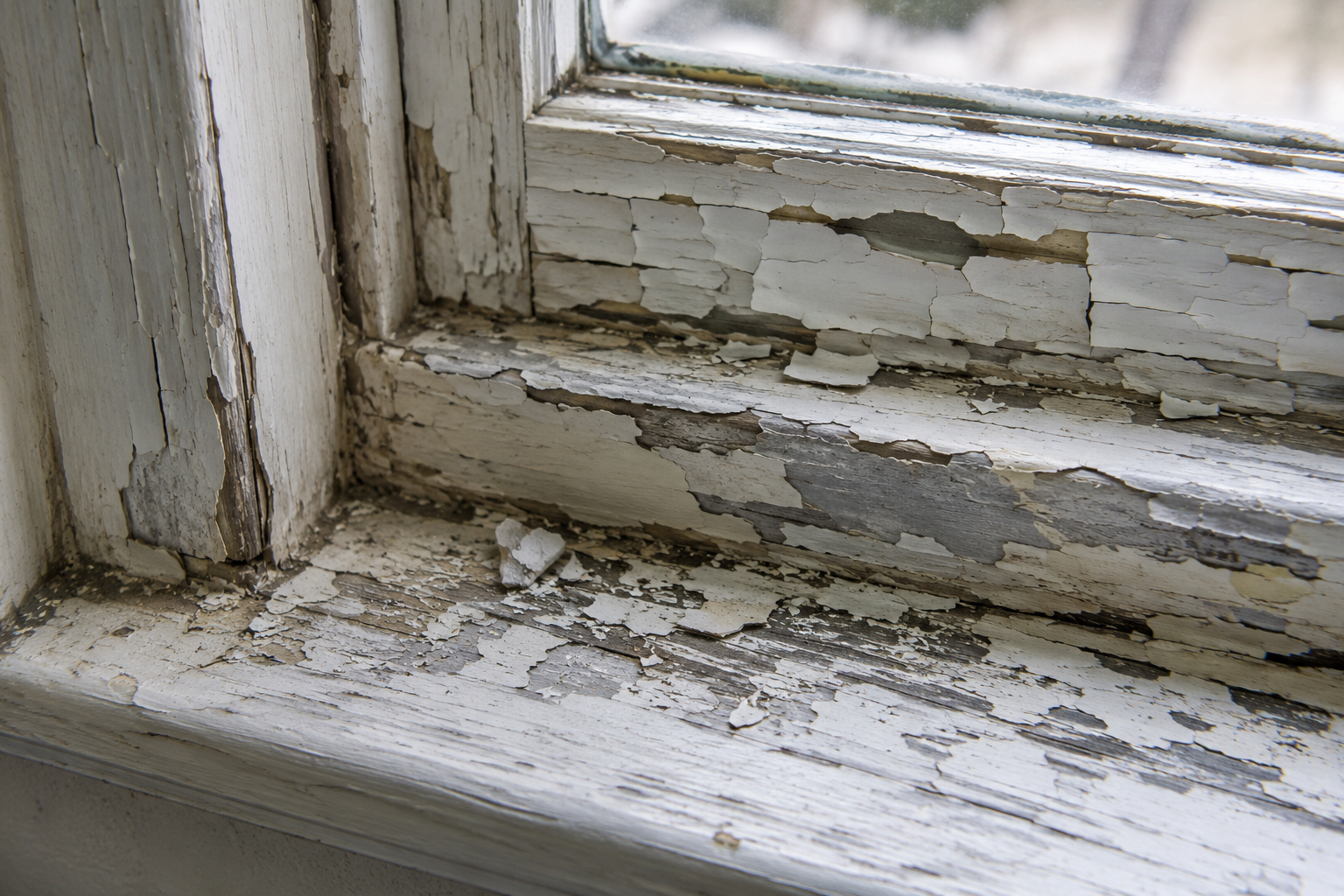
Peeling, chipping, or weathered paint
Renovation activities that disturb painted surfaces
Lead dust is extremely fine. It is often not visible, which makes it easy to overlook during normal occupancy. Once present, it can spread through regular household movement and cleaning patterns.
Why Children Are More Vulnerable
While lead exposure can affect anyone, children are particularly sensitive. Their behavior and development patterns increase the likelihood of exposure.
Young children frequently:
Touch floors, walls, and windowsills
Put hands or objects in their mouths
Spend more time in close contact with surfaces
Encapsulation involves applying a specially formulated coating or sealant over stable lead-based paint to create a durable barrier between the lead and the living environment. It is a recognized management strategy, but it requires the underlying paint to be in sound condition and should be performed by a qualified professional. It is not the same as applying a standard coat of paint.
Long-term exposure can impact neurological development, learning ability, and behavior. It can also affect pregnancy outcomes.
Adults are generally less sensitive, but prolonged exposure is still a concern, particularly in environments with ongoing dust generation.
When Lead Paint Does Not Create Significant Risk
A common misunderstanding in real estate transactions is that any amount of lead paint automatically creates a hazardous condition. That is not how risk is evaluated.
Lower-risk conditions typically include:
Painted surfaces that are intact and well adhered
Areas not subject to repeated friction or wear
Surfaces that have been properly sealed or encapsulated
In these cases, the lead remains contained within stable paint layers and does not readily enter the living environment.
Where Problems Tend to Develop
In older homes, lead-related issues tend to show up in predictable locations. These are areas where surfaces move, rub, or experience repeated use.
Common high-friction points include:
Window sashes and frames
Window sills
Door edges and jambs
Stair treads and railings
Baseboards and flooring transitions
Exterior trim and porch components
These locations gradually wear down paint, even in well-maintained homes. Over time, that wear can generate dust without obvious peeling or visible damage.
Renovation Is Often the Highest Risk Event
Most significant lead exposure events do not come from day-to-day living. They occur during renovation or repair work.
Activities that commonly release lead dust include:
Sanding painted surfaces
Cutting into walls or trim
Window replacement
Flooring removal
Demolition work
In Denver’s older homes, renovation is where risk increases quickly if proper precautions are not taken. Disturbing multiple layers of old paint can release a large amount of dust in a short period of time.
Contractors working on pre-1978 homes are required under the EPA's Renovation, Repair and Painting (RRP) Rule to be certified in lead-safe work practices. When hiring for any renovation project in an older Denver home, verifying that your contractor holds current RRP certification is an important step. Uncertified work that disturbs lead-bearing surfaces can create hazardous conditions that are difficult and costly to remediate.
This is why renovation approach matters more than the age of the home itself.
Testing and Identifying Lead Paint
Lead-based paint cannot be identified by appearance alone. Even experienced inspectors cannot confirm its presence without testing.
Two primary testing methods are used in residential settings. On-site testing uses specialized XRF equipment to read through paint layers non-destructively, producing results during the inspection itself without waiting for laboratory turnaround. Paint chip sampling involves collecting small samples that are sent to an accredited laboratory for analysis. This process is more involved and takes additional time. For homeowners and buyers who want answers quickly, on-site XRF testing is typically the more practical approach.
Testing is not always required, but it becomes particularly useful when planning renovation work or addressing deteriorating surfaces.
Disclosure Requirements in Real Estate Transactions
Federal law requires sellers of pre-1978 homes to disclose any known lead-based paint or lead-based paint hazards to buyers before the sale is finalized. Sellers must also provide buyers with the EPA's informational pamphlet on lead in the home. Buyers are entitled to a 10-day period to conduct a lead paint inspection or risk assessment, though this period can be waived by mutual agreement.
This is a legal requirement, not an optional courtesy. Agents representing either party should be familiar with the disclosure form and the documentation process.
Living Safely in a Pre-1978 Home
Many Denver homes with lead-based paint are occupied safely for decades. The key is maintaining conditions that prevent dust generation.
Practical approaches include:
Keeping painted surfaces in good condition
Addressing peeling or chipping paint promptly
Cleaning floors and surfaces using wet methods rather than dry dusting
Managing wear at windows, doors, and trim
Using appropriate practices when performing repairs or upgrades
Reducing dust entry from exterior soil, which can also contain lead
Exterior soil around older homes deserves particular attention, especially in yards where children play. In many Denver neighborhoods, soil near the foundation and under roof drip lines can contain elevated lead levels from decades of exterior paint deterioration and, historically, from leaded gasoline. Simple measures (such as maintaining ground cover, creating play areas away from the foundation, and encouraging handwashing) can meaningfully reduce this exposure pathway.
These are not complex measures, but they are effective when applied consistently.
Lead and Water Service Lines
In addition to paint, some older Denver properties may have lead components in their water service lines or plumbing systems.
This is separate from paint-related exposure, but it is another condition associated with older construction. Water providers or licensed plumbers can help determine whether lead service lines are present and whether replacement has occurred.
Inspector Insight
In Denver inspections, lead paint is rarely a surprise. What tends to matter more is where deterioration is occurring and whether renovation work has already disturbed older materials.
One of the most consistent patterns is dust generation at windows. Even when paint appears intact, the repeated movement of older window sashes can create fine dust on sills and nearby surfaces.
Another common issue arises during pre-sale updates. Fresh paint can improve appearance, but it does not eliminate underlying lead. If preparation work involved sanding or scraping without proper controls, that process may have already introduced dust into the home.
From an inspection standpoint, the conversation is usually not about whether lead exists, but how the home has been maintained and how future work should be approached.
Practical Implications
For buyers, a pre-1978 home should come with an expectation that lead-based paint may be present. This is part of the building’s history, not necessarily a defect. The focus should be on condition, maintenance, and any planned renovations.
For homeowners, lead paint becomes a management issue rather than an immediate problem. Keeping surfaces intact and approaching repairs carefully goes a long way toward reducing exposure.
For agents, lead paint is often a point of concern during transactions, but it is also a well-understood condition. Clear communication about risk, maintenance, and renovation practices helps keep the issue in perspective.
Ultimately, many older homes remain safe and functional because the materials are stable and properly maintained. The risk increases when those conditions change.
Author
Andrew Sams is the founder of Alpine Building Performance, a Denver based residential and commercial inspection firm. He holds a B.S. in Building Science and has over 15 years of experience in building diagnostics, energy auditing, and property condition assessment.
Andrew is a Certified Master Inspector (CMI), Certified Commercial Property Inspector (CCPI), and Radon Measurement Specialist. He was named the Denver Metro Association of Realtors 2022 Industry Partner of the Year and teaches continuing education courses for real estate professionals throughout Colorado.