Radon in Colorado Homes: What Buyers Actually Need to Know
Why Radon Testing Matters in Colorado Homes
Across Colorado, radon is one of the most common environmental conditions discovered during real estate transactions. Yet it remains one of the most misunderstood issues buyers encounter during the inspection process.
Radon is not related to how well a home was built, how new it is, or whether visible defects are present. A well-maintained house and a poorly maintained one can have identical radon levels. Because the gas has no smell, no color, and no visible warning signs, occupants typically have no indication it is present.
The only reliable way to determine radon concentration in a home is through testing.
For buyers evaluating a property, understanding how radon behaves, how it enters buildings, and how mitigation systems work helps remove unnecessary confusion during the inspection process.
What Radon Is
Radon is a naturally occurring radioactive gas produced by the breakdown of uranium in soil and rock. As uranium decays underground, radon gas forms and slowly migrates upward through the soil.
When buildings are constructed, they create pressure differences and pathways that allow soil gases to enter the structure.
Because radon is a gas, it can move through very small openings in the building foundation. Common entry points include:
· slab cracks
· control joints
· sump pits
· utility penetrations
· crawl spaces
· foundation wall joints
Any part of a building that is in contact with the soil can potentially allow radon entry.
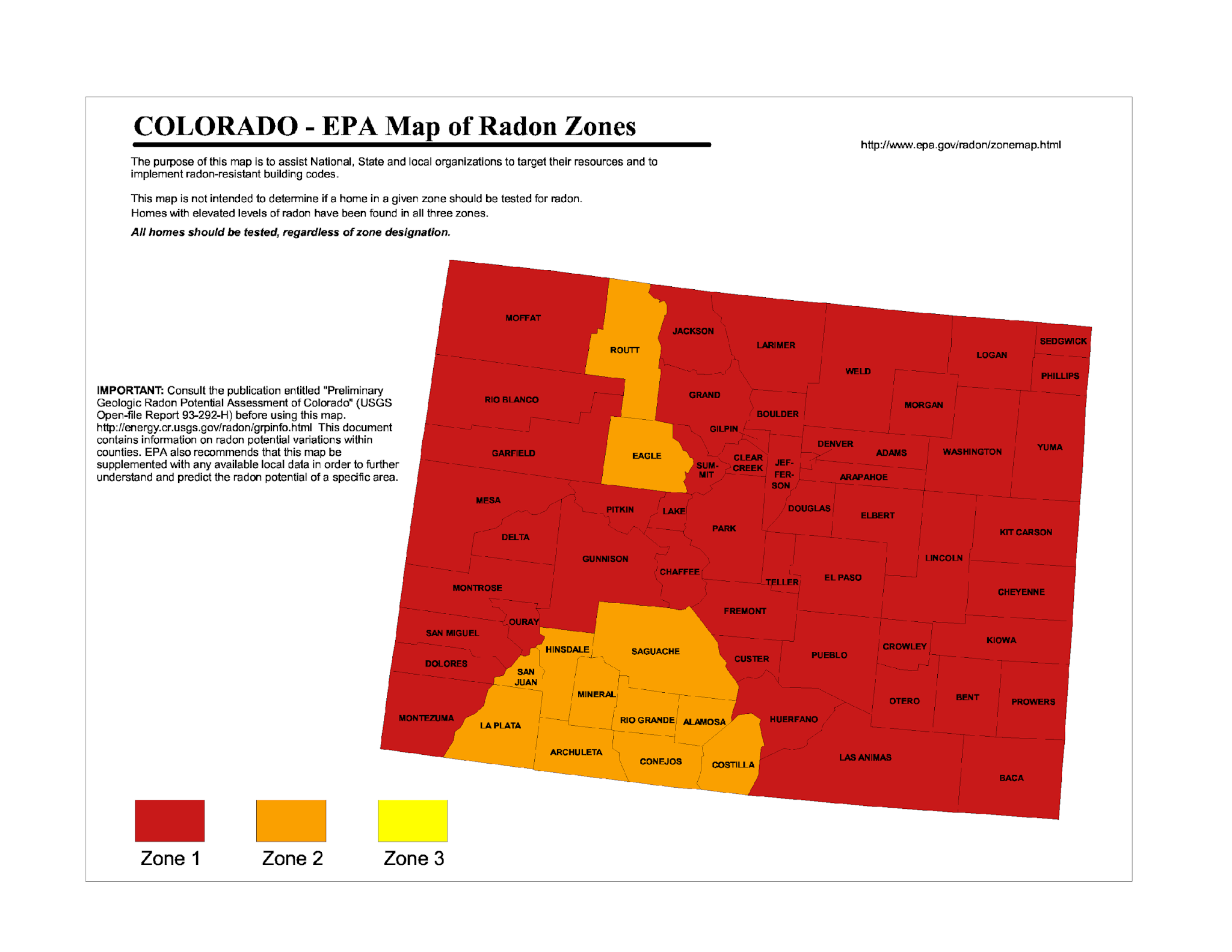
Colorado’s geology contains naturally elevated uranium concentrations in many regions, particularly along the Front Range. This is why radon levels across the state frequently exceed national averages.
The presence of radon in Colorado homes is therefore not unusual. In fact, elevated readings are routinely measured in homes of all ages and construction styles.
Why Radon Exposure Matters
Radon becomes a health concern when its radioactive decay products attach to airborne dust particles that are inhaled into the lungs.
Over long periods of exposure, this increases the risk of lung cancer. The U.S. Environmental Protection Agency identifies radon as the second leading cause of lung cancer in the United States after smoking.
What makes radon particularly challenging from a health standpoint is that exposure occurs silently. Occupants cannot detect the gas through smell or physical symptoms.
Without testing, homeowners simply have no way of knowing whether radon concentrations are elevated.
The Only Reliable Way to Know: Radon Testing
There is no visual inspection method that can determine radon levels inside a home. Even experienced inspectors cannot predict radon concentration based on visible building conditions.
Radon levels fluctuate due to several environmental and structural factors, including:
· soil composition beneath the home
· weather and atmospheric pressure changes
· building air pressure differences
· ventilation patterns within the structure
· seasonal conditions
During colder months, for example, homes are typically closed up and mechanical systems create stronger pressure differences between the building interior and the soil beneath the foundation. This can sometimes increase radon entry.
Because of these variables, two homes located on the same block can have very different radon levels.
A nearby home’s test result does not reliably predict the conditions in another structure.
Common Misconceptions About Radon
Many misunderstandings about radon arise during real estate transactions. A few assumptions appear frequently when buyers review test results.
“Only homes with basements need testing”
Basements often show higher radon concentrations because they are closest to the soil and typically have more potential entry points. However, homes built on crawlspaces or slab-on-grade foundations can also develop elevated radon levels.
Any building component that touches the ground can allow soil gases to enter the structure.
For that reason, testing is recommended regardless of foundation type.
“The home has a mitigation system, so testing isn’t necessary”
Radon mitigation systems are designed to reduce radon levels, not eliminate them permanently.
Over time, several issues can affect system performance, including:
· fan failure
· installation deficiencies
· new openings in the foundation
· structural changes to the building
· shifting soil conditions
Because of this, periodic retesting is recommended even in homes with existing mitigation systems.
“The home was recently tested, so the results will stay the same”
Accurate radon testing requires controlled conditions. During a short-term real estate test, homes must maintain closed-house conditions for a period before and during the test.
If windows are open, exterior doors remain open for long periods, or ventilation patterns change, test results may appear artificially low.
Radon levels can also fluctuate seasonally. A result from several months earlier may not accurately represent current conditions.
“My neighbors don’t have high radon”
Radon concentrations can vary dramatically even between adjacent homes.
Small differences in soil gas pathways, foundation design, grading, and construction details can significantly affect how soil gases move beneath a structure.
It is not uncommon for one house on a street to measure very low radon levels while a neighboring property measures significantly higher concentrations.
Testing each home individually is the only reliable approach.
Understanding Radon Test Results
In the United States, the commonly referenced action level for radon is:
4.0 picocuries per liter (pCi/L)
If test results measure at or above this level, mitigation is typically recommended.
It is important to understand that the action level is not a strict safety boundary. Radon risk increases gradually as concentration rises, and even lower levels still involve some degree of exposure.
However, the 4.0 pCi/L threshold provides a practical standard used in real estate transactions and environmental health guidance.
How Radon Mitigation Systems Work
Radon mitigation systems reduce radon by removing soil gases from beneath the building before they enter the home.
Although designs vary depending on the type of foundation, most systems operate on the same principle: sub-slab depressurization.
In a typical system:
1. A pipe is installed through the slab or foundation into the soil beneath the home.
2. A fan draws soil gases into the pipe.
3. The gases are vented safely above the roofline outside the building.
This process creates slight negative pressure beneath the foundation, preventing radon from entering the interior living space.
Homes with basements, crawlspaces, and slab foundations may require different configurations, but the underlying strategy remains the same.
When properly designed and installed, mitigation systems are usually very effective at reducing radon concentrations.
After a Mitigation System Is Installed
After installation, a follow-up radon test confirms whether the system successfully reduced radon levels.
Even after mitigation, periodic retesting is recommended.
Mechanical components such as fans eventually wear out, and building conditions can change over time. Regular testing ensures the system continues operating as intended.
For homeowners planning to sell in the future, maintaining a functional mitigation system and having recent test results can also help prevent delays during the transaction process.
Inspector Insight
During inspections across the Denver metro area and the Front Range, elevated radon levels appear in homes of every age and construction style.
New construction does not guarantee low radon levels, and older homes without basements sometimes measure higher than nearby houses with finished basements.
One of the most common misunderstandings buyers have is assuming radon indicates a defect in the home. In reality, radon presence is primarily related to soil conditions beneath the building rather than construction quality.
Another common scenario involves homes that already have mitigation systems installed. Buyers sometimes assume this means the radon issue has been permanently resolved. In practice, systems should still be periodically tested to confirm they remain effective.
From an inspection standpoint, radon is best understood as a manageable environmental condition rather than a structural problem.
Practical Implications for Buyers and Homeowners
For buyers evaluating a home in Colorado, radon testing is a routine part of the due diligence process.
Testing provides a snapshot of current radon conditions under controlled conditions. If levels exceed recommended thresholds, mitigation systems are widely available and typically straightforward to install.
For existing homeowners, periodic testing provides reassurance that radon levels remain within acceptable ranges and that any mitigation systems are functioning properly.
Because radon conditions can change over time, retesting every few years or during major renovations is generally recommended.
Understanding this process allows buyers and homeowners to approach radon with realistic expectations rather than unnecessary concern.
Key Takeaways
Radon is common across Colorado and cannot be detected without testing.
Any home type, including slab and crawlspace homes, can develop elevated radon levels.
Nearby homes or previous tests do not reliably predict current conditions.
Mitigation systems effectively reduce radon but should be periodically retested.
The commonly referenced action level in the United States is 4.0 pCi/L.
Testing during a home purchase and periodically afterward remains the most reliable way to manage radon exposure.
Author Biography for Andrew Sams
Andrew Sams is the founder of Alpine Building Performance, a Denver-based residential and commercial inspection firm. He holds a B.S. in Building Science and has over 15 years of experience in building diagnostics, energy auditing, and property condition assessment. Andrew is a Certified Master Inspector (CMI), Certified Commercial Property Inspector (CCPI), and Radon Measurement Specialist, and was named the Denver Metro Association of Realtors (DMAR) 2022 Industry Partner of the Year. He also teaches continuing education courses for real estate professionals across Colorado.