
Whole-Home Ventilation, Humidification, and Indoor Air-Quality Systems in Denver Luxury Homes: What Buyers Should Know
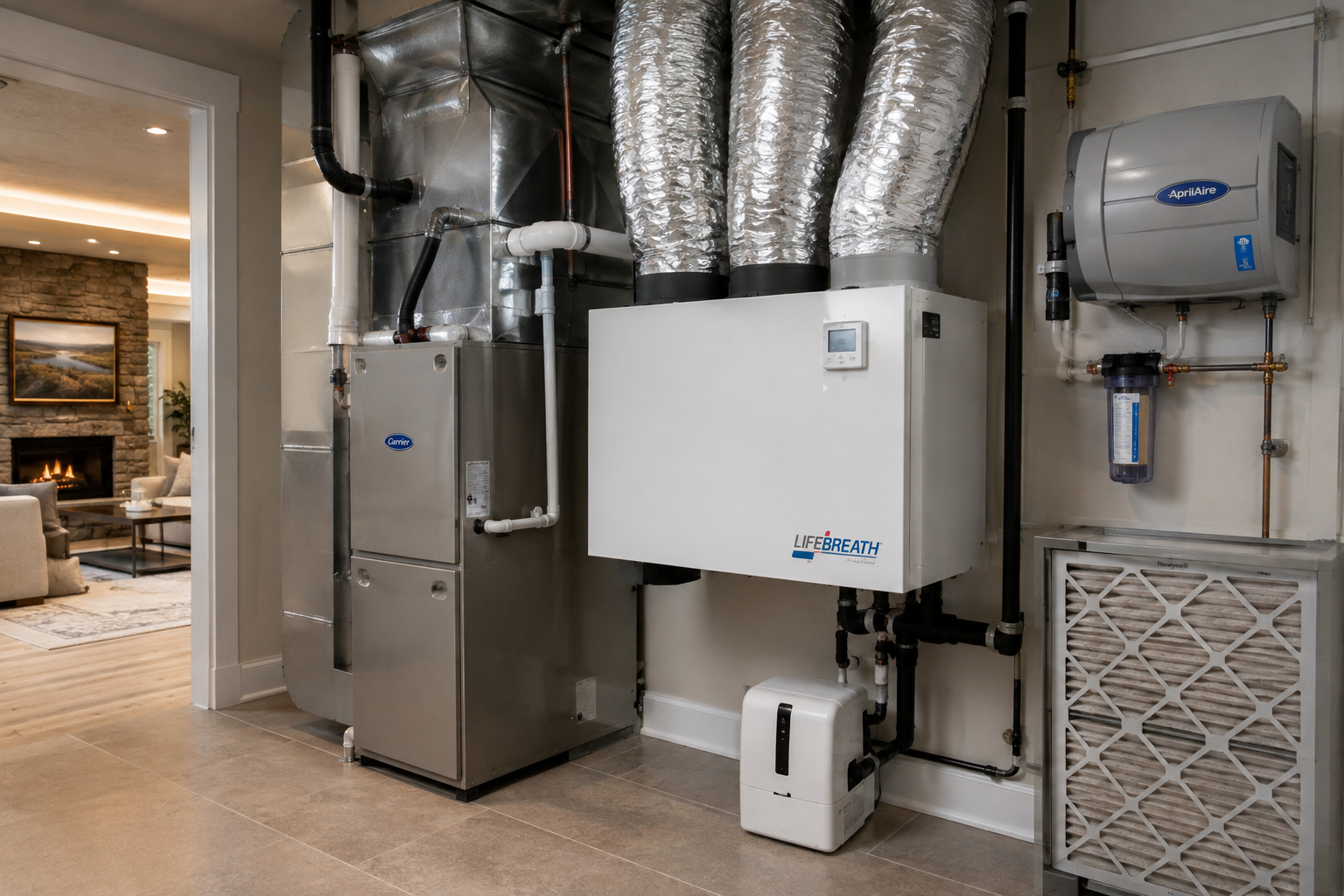
Denver-area luxury homes often contain equipment designed to manage much more than indoor temperature. In addition to furnaces and air conditioners, a property may have heat-recovery ventilators, energy-recovery ventilators, whole-home humidifiers, dehumidifiers, high-efficiency filters, electronic air cleaners, ultraviolet lights, fresh-air intakes, and automated indoor air-quality controls.
These systems can improve comfort and help manage indoor pollutants when they are properly designed, installed, and maintained. They can also create moisture, airflow, and pressure concerns when they do not operate as intended. Advanced equipment alone does not guarantee good indoor air quality. A ventilation system may be installed but disabled. A high-efficiency filter may restrict airflow if the duct system was not designed for it. A humidifier may improve winter comfort while also contributing to condensation on windows or moisture in the attic. What matters is not simply which products are present, but whether ventilation, filtration, humidity control, exhaust, and the building enclosure work together appropriately for the home.
Key Takeaways
• Tighter luxury homes often require controlled mechanical ventilation to replace stale indoor air with outdoor air.
• Heat-recovery ventilators and energy-recovery ventilators exchange indoor and outdoor air while retaining part of the energy that would otherwise be lost.
• Whole-home humidifiers can improve winter comfort in Colorado, but excessive humidity can contribute to window condensation, attic moisture, and concealed building damage.
• High-efficiency filtration is only effective when the filter fits properly, airflow remains adequate, and the HVAC system operates often enough to circulate air.
• Exhaust fans, fireplaces, clothes dryers, and large range hoods can affect building pressure and the operation of fuel-burning appliances.
• Indoor air quality depends on source control, ventilation, filtration, moisture management, and maintenance rather than any single device.
Why Ventilation Matters in Large, Tightly Built Homes
Every occupied home produces moisture and indoor pollutants. Cooking, showering, cleaning, breathing, pets, fireplaces, furnishings, and household products all affect indoor conditions. Building materials and finishes may also release odors or chemical compounds, particularly after construction or renovation. Older homes often received substantial outdoor air through natural leakage around windows, doors, framing connections, and other openings. That air leakage was uncontrolled and inefficient, but it provided some level of dilution.
Newer luxury homes are generally built with tighter envelopes. Older estates may also become much tighter after window replacement, insulation work, and air-sealing improvements. This is especially relevant in established Denver neighborhoods such as Country Club and Hilltop, where older homes may have undergone several generations of enclosure and mechanical upgrades.
Reducing uncontrolled air leakage can improve comfort and energy performance. However, a tighter home may retain more moisture, odors, and indoor pollutants unless controlled ventilation is provided. Mechanical ventilation addresses that problem by introducing outdoor air at a controlled rate while removing stale indoor air. The goal is not to make the home drafty. It is to exchange enough air to support healthy indoor conditions without creating unnecessary energy loss or comfort problems.
Natural Air Leakage Is Not the Same as Ventilation
Air entering through random gaps in the building enclosure should not be confused with intentional ventilation. Natural leakage changes with wind, outdoor temperature, and building pressure. It may be excessive during a cold or windy day and very limited during mild conditions. The source of that air is uncontrolled as well. Air may enter through a clean outdoor-air intake, but it may instead be drawn through a garage, crawlspace, attic, chimney, or dusty wall cavity.
Mechanical ventilation provides a more predictable pathway. Outdoor air enters through a known location, typically passes through a filter, and is distributed through dedicated ductwork or the home’s HVAC system. This distinction is especially important in large homes with complex envelopes, attached garages, multiple mechanical systems, and strong exhaust equipment. Custom properties in communities such as Cherry Hills Village may combine all of these conditions within one building, making intentional ventilation more important than simply relying on incidental air leakage.
HRVs and ERVs
Heat-recovery ventilators and energy-recovery ventilators are two common types of whole-home ventilation equipment. Both systems typically contain two separate air streams. One removes stale indoor air while the other brings outdoor air into the home. The air streams pass through a central core without directly mixing. A heat-recovery ventilator, commonly called an HRV, transfers heat between the outgoing and incoming air.
During winter, heat from the outgoing indoor air helps warm the incoming outdoor air. During summer, the process can work in reverse by reducing some of the heat entering with the outdoor air. An energy-recovery ventilator, or ERV, transfers both heat and a portion of the moisture between the two air streams. In winter, an ERV may retain some indoor moisture rather than exhausting all of it. During warmer conditions, it may reduce part of the outdoor moisture entering the home.
The distinction matters, but neither system replaces a furnace, air conditioner, humidifier, or dehumidifier. These ventilators reduce the energy penalty associated with exchanging air; they do not independently create ideal indoor conditions. The appropriate system depends on the climate, building enclosure, occupancy, existing mechanical equipment, and the amount of moisture generated inside the home. Cold-weather operation also matters in Denver. During very cold conditions, moisture in the outgoing air can freeze within an HRV or ERV core, so properly designed systems use defrost cycles, airflow controls, preheating, or other freeze-protection strategies to keep the core operating as intended.
How Whole-Home Ventilation Is Distributed
Ventilation systems can be connected to the home in several ways. Some use dedicated supply and exhaust ducts. Others introduce fresh air into the return side of a forced-air HVAC system so it can be filtered and distributed through the home’s existing ductwork. A ventilation system may exhaust air from bathrooms, laundry rooms, or other areas where moisture and odors are generated. Fresh air may be supplied to bedrooms, living areas, or the HVAC return system.
Large homes may have more than one ventilation unit or separate systems serving different wings. In highly customized properties such as those found in Castle Pines Village, separate bedroom wings, finished lower levels, and multiple HVAC systems can make ventilation distribution considerably more complex than it is in a typical single-system home.
The system’s effectiveness depends on more than whether the fan operates. Duct layout, airflow, controls, filters, exterior terminations, and balancing all affect how air moves through the property. A ventilation unit can run while delivering very little useful airflow if its filters are clogged, ducts are disconnected, exterior openings are blocked, or controls are incorrectly configured.
Ventilation Systems Require Balance
A balanced ventilation system is intended to bring in approximately as much air as it removes. If substantially more air is exhausted than supplied, the home can become negatively pressurized. Outdoor air will then be pulled through openings in the enclosure to replace the air that has been removed. If more air is supplied than exhausted, the home may become positively pressurized. Indoor air can be pushed into wall cavities, attic spaces, and other parts of the building enclosure. Neither condition should be evaluated based on one fan alone.
Kitchen exhaust, bathroom fans, clothes dryers, fireplaces, central vacuum systems, whole-house fans, and ventilation equipment may all operate at different times. The combined effect can change pressure relationships throughout the home. Pressure becomes especially important when natural-draft furnaces, boilers, or water heaters are present. Strong exhaust can interfere with chimney draft and increase the possibility of combustion gases spilling into the home. Taken together, these pressure effects make ventilation a building-science issue, not simply an equipment feature.
Whole-Home Humidification in Colorado
Colorado’s dry climate makes whole-home humidifiers appealing, particularly in large Denver-area homes with extensive wood flooring, millwork, and other interior finishes that can be sensitive to very dry winter conditions. During winter, cold outdoor air contains relatively little moisture. When that air enters the home and is heated, the indoor relative humidity can become very low. Dry indoor conditions may contribute to static electricity, dry skin, shrinking woodwork, gaps in flooring, and general discomfort. A whole-home humidifier adds moisture to the air, usually through the forced-air HVAC system.
Common systems include bypass humidifiers, fan-powered humidifiers, and steam humidifiers. Each uses a different method to introduce moisture, but all require a water supply, controls, drainage, and regular maintenance. Steam humidifiers can provide substantial output and are often used where higher or more precisely controlled humidification is needed. They may be encountered in large custom homes in areas such as Greenwood Village, where extensive hardwood flooring, cabinetry, and large interior volumes can increase the desire for controlled winter humidification. They can also create a significant moisture load if their controls or sensors are not operating correctly.
A single humidity setting is rarely appropriate for the entire winter. Appropriate indoor humidity changes with outdoor temperature, window performance, insulation, air leakage, and the construction of the home. A humidity level that causes no problems during mild weather may create condensation when outdoor temperatures fall sharply.
Why Excess Humidity Can Damage a Home
Humidification is often viewed only as a comfort feature, but it directly affects the building enclosure. Warm indoor air can hold more moisture than cold air. When that air contacts a sufficiently cold surface, the moisture can condense. Windows are often the first place the problem becomes visible. Condensation may appear along glass edges, frames, or sills. Persistent moisture can damage wood finishes, drywall, trim, and surrounding wall materials. Windows are not always the coldest surfaces in the home. Concealed areas within exterior walls, roof assemblies, and attics may be colder.
Warm, humid air that leaks into an attic can condense or freeze on roof sheathing. Over time, this may contribute to frost accumulation, staining, mold growth, damaged insulation, or moisture that appears similar to a roof leak. Large luxury homes may be especially sensitive because they often contain complex rooflines, high ceilings, numerous recessed lights, multiple attic areas, and many mechanical or electrical penetrations. Foothill properties around Genesee can add another variable because colder, windier winter conditions may increase pressure differences and lower the temperature of exterior surfaces and roof assemblies.
A humidifier can be operating exactly as commanded while still creating too much moisture for the home’s enclosure to manage safely.
Common Humidifier Concerns
Whole-home humidifiers require more maintenance than many homeowners realize. Water panels or internal components can accumulate mineral deposits. Drain lines can clog or leak. Water valves may fail to close completely. Humidity sensors may be poorly located or no longer accurate. Common visible concerns include corrosion, mineral buildup, water staining, leaking supply connections, clogged drains, damaged duct connections, and humidifiers that have been disconnected but left in place.
Some units are installed above furnaces or other mechanical equipment. Leakage in these locations can damage the furnace cabinet, electrical components, ductwork, or nearby finishes. Controls also matter. A humidistat located near the mechanical room may not represent conditions in distant bedrooms or upper floors. More advanced systems may use outdoor-temperature sensors to reduce humidity automatically during very cold weather. If those sensors are missing, disabled, or inaccurate, the humidifier may continue adding moisture when the home can no longer tolerate it.
Dehumidification in Luxury Homes
Colorado is generally dry, but some luxury properties still use whole-home dehumidifiers. These systems are less common than humidifiers, but they can make sense where a property has a specific moisture source or an unusually tight enclosure. These systems may be installed in indoor pool areas, garden-level spaces, finished basements, tightly constructed homes, or properties with recurring moisture concerns. Large estate homes in Cherry Hills Village or Greenwood Village, for example, may contain indoor pools, spas, extensive below-grade living space, or specialty rooms that create localized humidity-control needs despite Denver’s generally dry climate.
Air conditioning removes some moisture during normal operation, but it may not provide adequate dehumidification during mild or unusually humid conditions. Dedicated dehumidification can be particularly useful during spring and fall periods when indoor moisture is elevated but outdoor temperatures do not create enough cooling demand for the air conditioner to run for long periods. Indoor pools and spas create a different level of moisture demand and often require dedicated equipment designed to manage humidity, temperature, ventilation, and condensation.
A dehumidifier produces condensate that must drain properly. It also generates heat during operation, which can affect room temperature and cooling demand. Dehumidification equipment often points to a specialty space or a known moisture load. That is not necessarily a defect, but the reason for the equipment and its operating condition should be understood.
Filtration and Air Cleaning
Most forced-air HVAC systems contain a filter, but not every filter provides the same level of particle removal. Basic filters primarily protect the blower and heating or cooling coils from dust. Higher-efficiency filters can capture smaller airborne particles, depending on their rating, installation, and the amount of air that passes through them. MERV 13 filtration is increasingly used where finer particle removal is desired and can be especially useful during Front Range wildfire-smoke events because it captures substantially more fine particulate matter than basic filters. Luxury homes may use deep media filters, electronic air cleaners, standalone filtration units, or dedicated systems designed to operate continuously. A more restrictive filter is not automatically a better filter for the system.
Air must still move through the system. A filter that creates excessive resistance can reduce airflow, increase blower strain, affect heating and cooling performance, and contribute to comfort problems. A MERV 13 filter, for example, should be appropriate for the available filter area, duct system, and blower performance rather than installed simply because the rating is higher. Filter cabinets should also fit correctly. Gaps around the filter can allow air to bypass the media, reducing effectiveness even when a high-quality filter is installed. Filtration performance also depends on runtime.
A filter only cleans air while the fan or air-cleaning equipment is operating. A highly rated filter in a system that runs infrequently may provide less whole-home benefit than expected.
Electronic Air Cleaners and Ultraviolet Lights
Electronic air cleaners use electrically charged components to capture certain particles from the air stream. These systems require regular cleaning and may become less effective when internal cells are dirty, damaged, or disconnected. Some electronic air-cleaning technologies can also generate ozone as a byproduct of operation. Because ozone is a respiratory irritant, the type and condition of the equipment matter in addition to whether the cleaner is powered and collecting particles. It is common to find electronic air cleaners that remain installed in the ductwork but are no longer powered or maintained. Ultraviolet lights are another common indoor air-quality accessory.
UV lights are generally installed near an evaporator coil or within ductwork. In many residential systems, UV-C lamps are used primarily to limit microbial growth on damp evaporator-coil and drain-pan surfaces, where organisms receive prolonged exposure to the light. Treating microorganisms moving rapidly through the airstream requires sufficient UV intensity and exposure time, so a typical residential UV lamp should not automatically be viewed as an air-sterilization system. Their usefulness depends on the type of lamp, placement, exposure time, maintenance, and the specific purpose of the installation. UV lamps lose effectiveness with age even when they still appear illuminated, and they can damage nearby plastic or wiring materials if improperly positioned. Neither an electronic air cleaner nor a UV light should be treated as proof that the home has healthy air. They are individual components within a broader system that still depends on moisture control, filtration, ventilation, cleanliness, and pollutant-source management.
Source Control Comes First
Indoor air-quality equipment cannot correct every source of contamination. A filter may reduce airborne particles, but it does not repair a water leak. A ventilation system may dilute odors, but it does not remove mold growth from a wet building material. A UV lamp does not correct poor drainage, sewer-gas entry, combustion spillage, or an attached-garage air leak. Indoor air-quality problems are best addressed at the source first.
Potential sources may include moisture intrusion, unvented combustion, smoking, attached garages, dirty ductwork, poorly vented cooking appliances, pet-related allergens, stored chemicals, and deteriorated building materials. Ventilation and filtration can then help reduce what remains in the indoor environment. This distinction is important during real estate transactions. The presence of air-cleaning equipment should not distract from visible moisture, combustion, plumbing, or building-envelope concerns.
Kitchen Exhaust and Makeup Air
Luxury kitchens frequently contain large commercial-style ranges and high-capacity exhaust hoods. This is common in extensively renovated homes in neighborhoods such as Country Club and Hilltop as well as newer custom properties in Cherry Hills Village, where kitchen exhaust capacity may be far greater than in a typical home. These hoods can remove a substantial amount of air from the home.
When air is exhausted, replacement air must enter somewhere. Without a controlled makeup-air pathway, the home may draw air through fireplaces, chimneys, garages, crawlspaces, or other openings. Large kitchen hoods can also compete with natural-draft furnaces, boilers, and water heaters. A makeup-air system provides outdoor air to replace some of what the hood removes. It may operate automatically when the range hood is turned on and may include a damper, ductwork, heater, filter, or connection to the HVAC system. High-capacity hoods also deserve attention from a code standpoint. Some adopted residential codes use exhaust capacity above 400 CFM as an important threshold for makeup-air requirements under specified combustion-appliance conditions, although the exact requirement depends on the locally adopted code, amendments, and equipment configuration.
The presence of a makeup-air duct does not necessarily mean the system is operating. Dampers can stick, controls can fail, exterior openings can become blocked, and homeowners may not understand how the system is intended to function. Range hoods, makeup air, fireplaces, and combustion equipment should be considered together rather than as unrelated appliances.
Bathroom Exhaust and Other Local Ventilation
Bathrooms, laundry rooms, and other moisture-producing spaces depend on local exhaust. Bathroom fans should move humid air to the exterior rather than into an attic, crawlspace, or concealed cavity. In large homes, long duct runs, multiple elbows, dirty fan housings, and poorly installed exterior terminations can reduce airflow even when the fan sounds operational. Laundry equipment also affects indoor conditions.
Clothes dryers exhaust air from the home and require a clear exterior duct. Long or restricted dryer vents can reduce drying performance and increase moisture and lint concerns. Some luxury homes contain several laundry rooms, numerous bathrooms, and multiple exhaust systems. That type of arrangement is common in larger custom properties in places such as Castle Pines Village, where separate bedroom suites, guest areas, and finished lower levels may each have dedicated exhaust. Each fan may appear minor, but their combined effect can be significant.
Smart Controls and Indoor Air-Quality Sensors
Modern homes may use wall-mounted sensors or automation systems to track humidity, carbon dioxide, particulate matter, or volatile organic compounds. These devices can provide useful information, but their readings require context. Sensor location, calibration, maintenance, outdoor conditions, cooking activity, cleaning products, fireplaces, and occupancy can all affect results. Consumer sensors may also use different measurement methods and may not agree with one another.
The presence of a low reading at one control panel does not confirm uniform air quality throughout a large home. A sensor in an open living area may not represent a bedroom wing, basement, indoor pool, garage-adjacent room, or other isolated space. Controls are most useful when they are connected to equipment that responds appropriately. A sensor may display elevated humidity while the dehumidifier remains disabled, or indicate poor air quality without activating the ventilation system. Understanding that relationship is more important than the appearance of the display.
Why This Topic Is Difficult for a Novice or Intermediate Home Inspector
Whole-home ventilation and indoor air-quality systems can be difficult to evaluate because many components appear secondary to the main HVAC equipment. A less-experienced inspector may note the presence of an HRV, humidifier, filter cabinet, or UV light without determining whether it is connected, powered, controlled, maintained, or appropriate for the home. The harder part is understanding how the systems interact.
Increasing ventilation may reduce indoor pollutants but also change heating demand and indoor humidity. Adding humidification may improve comfort while increasing condensation risk. Installing a highly restrictive filter may capture smaller particles while reducing airflow through the HVAC system. Large exhaust fans can remove odors and moisture while also depressurizing the home. Air sealing can improve efficiency while increasing the need for controlled ventilation. Those tradeoffs are easy to miss when each device is evaluated in isolation.
Experience is also necessary to recognize when visible symptoms point to a larger system imbalance. Window condensation may relate to humidifier settings, but window temperature, outdoor conditions, interior airflow, and building leakage also matter. Attic frost may appear to be a roofing issue even though the moisture originated inside the home. The inspector must connect mechanical operation with the conditions observed throughout the property.
What an Experienced Inspector Evaluates
A thorough inspection begins by identifying the ventilation, humidification, filtration, and air-cleaning equipment that is present. Accessible components should be reviewed for visible condition, power, controls, filters, duct connections, drainage, water supply, maintenance needs, and signs of leakage or corrosion. Exterior ventilation openings should be considered for location, damage, blockage, and possible contamination sources. Fresh-air intakes should not be positioned where they are likely to draw in vehicle exhaust, combustion gases, dryer exhaust, or other pollutants.
The inspection also has to extend beyond the equipment itself. Window condensation, attic frost, staining, musty odors, high indoor humidity, unusually dry conditions, dirty filters, weak exhaust, and evidence of pressure-related combustion problems may reveal how the systems are performing in the actual building. In a luxury home, the evaluation should also consider multiple HVAC systems, separate wings, attached garages, fireplaces, large range hoods, indoor pools, and specialty spaces. The goal is to determine whether the visible equipment and conditions make sense as one coordinated indoor-environment system.
Why Maintenance Records Matter
Indoor air-quality equipment often receives less maintenance than furnaces and air conditioners. Ventilator cores and filters require cleaning or replacement. Humidifiers need regular service and seasonal adjustment. UV lamps lose effectiveness over time. Electronic air-cleaner cells must be cleaned. Dehumidifiers and condensate systems need drainage maintenance. Service records can help identify whether the equipment is actively maintained or simply remains installed. Service records can also explain why a system was added in the first place.
A dehumidifier may have been installed for an indoor pool or after a basement moisture concern. A ventilation system may have been added during an air-sealing project. A steam humidifier may have been installed to protect wood flooring or improve winter comfort. Understanding the purpose of the equipment makes its condition and operation easier to interpret.
Inspector Insight
One of the most common issues with indoor air-quality systems is that the equipment is present but no longer functioning as part of the home. A ventilation unit may be switched off because the homeowner found it noisy. An electronic air cleaner may have no power. A humidifier may remain connected to the ductwork even though its water supply has been closed for years. The home is then marketed as having advanced air-quality equipment, but the installed components may provide little current benefit. Another common misunderstanding is assuming that more humidity is always better in Colorado.
Humidification can improve comfort during dry winter weather, but the setting must remain appropriate for the outdoor temperature and the home’s enclosure. Condensation at windows or frost in the attic may indicate that the building is receiving more moisture than it can safely manage. The equipment makes the most sense when it is compared with the conditions observed throughout the home.
Practical Implications for Homeowners and Buyers
Homeowners should understand what each indoor air-quality device does and how often it requires maintenance. Ventilator filters, humidifier panels, electronic-cleaner cells, UV lamps, dehumidifier drains, and HVAC filters may all have different service schedules. Humidity settings should be adjusted as outdoor conditions change, particularly during very cold weather. Persistent window condensation, attic frost, musty odors, or water staining should not be treated as normal side effects of winter comfort. For buyers, it is important to determine which systems are active and how they are controlled.
A buyer should know whether ventilation operates continuously, on a timer, through an indoor air-quality sensor, or only with the main HVAC system. The buyer should also understand whether large range hoods have makeup air and whether filtration equipment requires proprietary or unusually expensive replacement components. For agents, the presence of advanced equipment should be described accurately. An HRV, steam humidifier, UV light, or electronic air cleaner can be a valuable feature, but only when it is operating, maintained, and appropriate for the property.
The Bottom Line
Whole-home ventilation, humidification, and indoor air-quality systems can improve comfort and indoor conditions in a Denver-area luxury home, but no single device creates healthy air by itself. Ventilation must be balanced. Humidification must remain within what the building enclosure can tolerate. Filters must capture particles without interfering with airflow. Exhaust equipment must remove pollutants without creating harmful pressure conditions.
A thorough inspection should evaluate the accessible equipment, controls, filters, ducts, drains, water connections, and exterior terminations while also looking for evidence of moisture, poor ventilation, or pressure imbalance throughout the property. For buyers, the number of indoor air-quality products matters far less than how the system performs as a whole. Ventilation, humidity control, filtration, exhaust, and the building enclosure should function as one coordinated system.
Author
Andrew Sams is the founder of Alpine Building Performance, a Denver based residential and commercial inspection firm. He holds a B.S. in Building Science and has over 15 years of experience in building diagnostics, energy auditing, and property condition assessment.
Andrew is a Certified Master Inspector (CMI), Certified Commercial Property Inspector (CCPI), and Radon Measurement Specialist. He was named the Denver Metro Association of Realtors 2022 Industry Partner of the Year and teaches continuing education courses for real estate professionals throughout Colorado.