
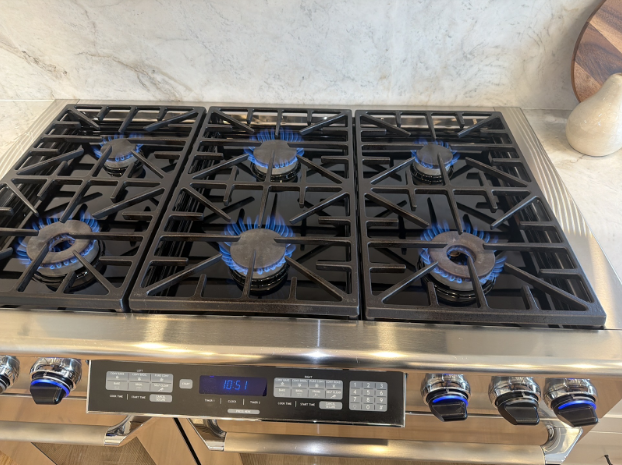
Last month we discussed the new ultra low emissions law in Colorado that requires all new water heaters and furnaces installed in Colorado after 2026 to be low emissions or ultra low NOx. While this law is meant to address emissions on a larger scale, the greatest threat that combustion emissions have to you directly, is from your gas range/oven.
Here’s why:
Every time you cook with a gas range, it produces nitrogen dioxide, carbon monoxide, and other combustion byproducts directly inside your home. Unlike your furnace or water heater, which vent exhaust to the exterior, your gas range releases those pollutants into your living space.
Without proper ventilation, these contaminants can accumulate and impact indoor air quality. Short term exposure can cause headaches, irritation, or respiratory discomfort. Long term exposure has been linked to increased asthma risk, especially in children.
Here’s what you can do:
Use a vent hood that exhausts to the exterior. A recirculating fan with a charcoal filter does not remove combustion gases.
Turn the hood on every time you cook, especially when using high heat or multiple burners.
If your current microwave or hood does not vent outside, consider upgrading to one that does.
We recognize that this information isn’t fun to read, but we believe that informed homeowners are empowered (and often healthier) homeowners. Cooking with gas is popular for many reasons, and simple ventilation habits can make a significant difference in protecting your home’s indoor air quality.