How long does a standard water heater typically last?

A standard tank water heater is typically expected to have a 12 year service life. Most water heaters come with a standard manufacturers warranty of 6 years, with options of up to 12 years. Generally tanks at or past 12 years are considered past expected service life.

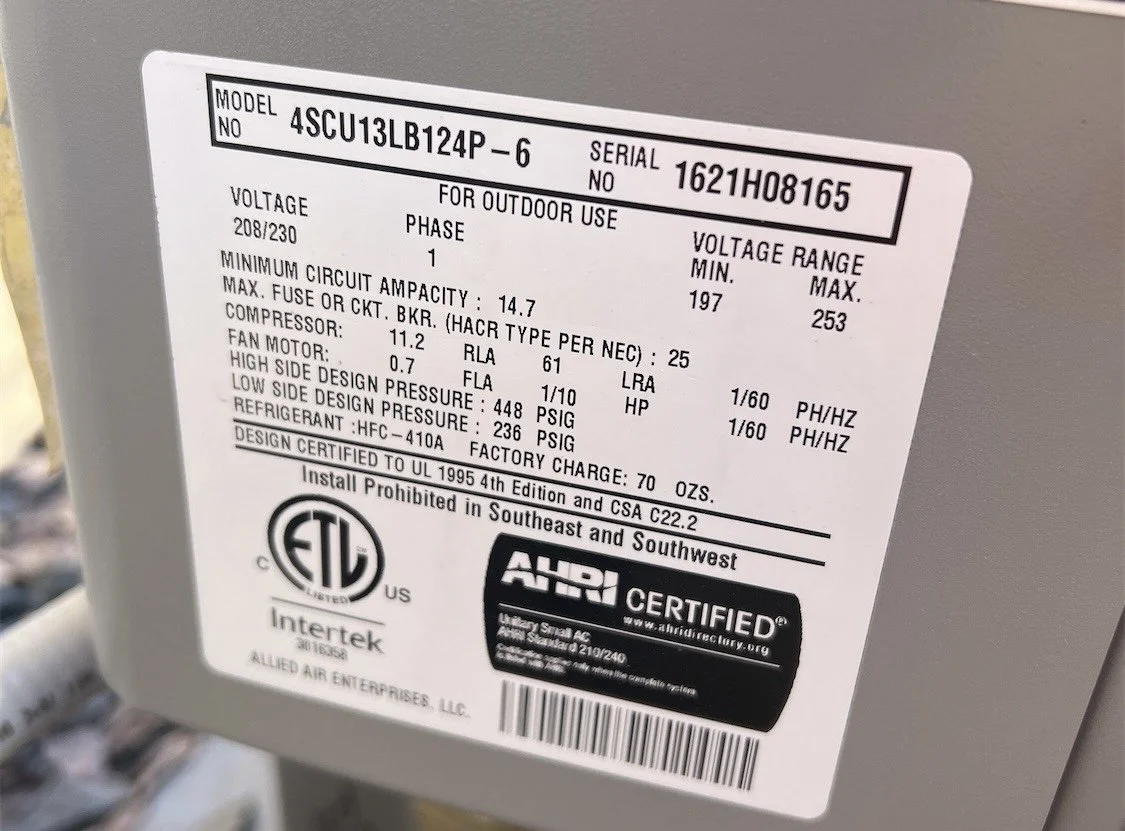
Equipment age can be determined by following the date guide on the Building Intelligence Center website. Link: https://www.building-center.org/

What are the maintenance requirements of a tankless water heater?

Tankless water heaters should be serviced annually by having the system flushed to remove scale buildup and deposits. Mineral buildup will reduce the efficiency of the heat exchanger and shorten the lifespan of the unit. Routine maintenance is particularly important in homes with hard water as scale buildup will occur more quickly. Cleaning of the air filter and water filter (if present) also need to be conducted on an annual basis to ensure proper operation.

What is the difference between a sewage ejector pump and a sump pump?

Although sump pumps and sewage ejection systems, commonly referred to as “lift stations”, look similar at a glance, it’s important to know the difference between the two. Simply put, sump pumps handle and remove ground water, whereas sewage ejector pumps handle and pump domestic sewage produced by the use of plumbing fixtures in a home.

Sewage ejector pumps are necessary when the level of the sewer line is above the lowest plumbing fixture or drain line within a home. This is standard and necessary where a plumbing fixture has been installed in a basement with no previous plumbing, or commonly in new construction where an old home was demolished and replaced with a new home containing a basement. The level of the municipal sewer line cannot be lowered, so the home has to rely on a pump to “lift” the sewage to a point where it can naturally drain to the sewage by force of gravity. Sewage ejector pumps are typically identified by having a sealed lid with 2 pipes, whereas sump pumps often have only 1 pipe and may or may not have a sealed lid.

What is hard water?

“Hard water” is water that naturally has high mineral content due to the soil that it once percolated through. Municipal water can be hard in addition to private drinking wells due to the fact that municipal water treatment disinfects, but does not treat water mineral content. Hard water does not pose a health hazard, and can even offer some mild health benefits, but it can lead to dry skin, limescale and soap scum buildup. Hard water can also lead to premature failure of water using appliances as the scale buildup can reduce water flow. A water softening system can be installed to neutralize hard water if desired.

How to determine if you have hard water?

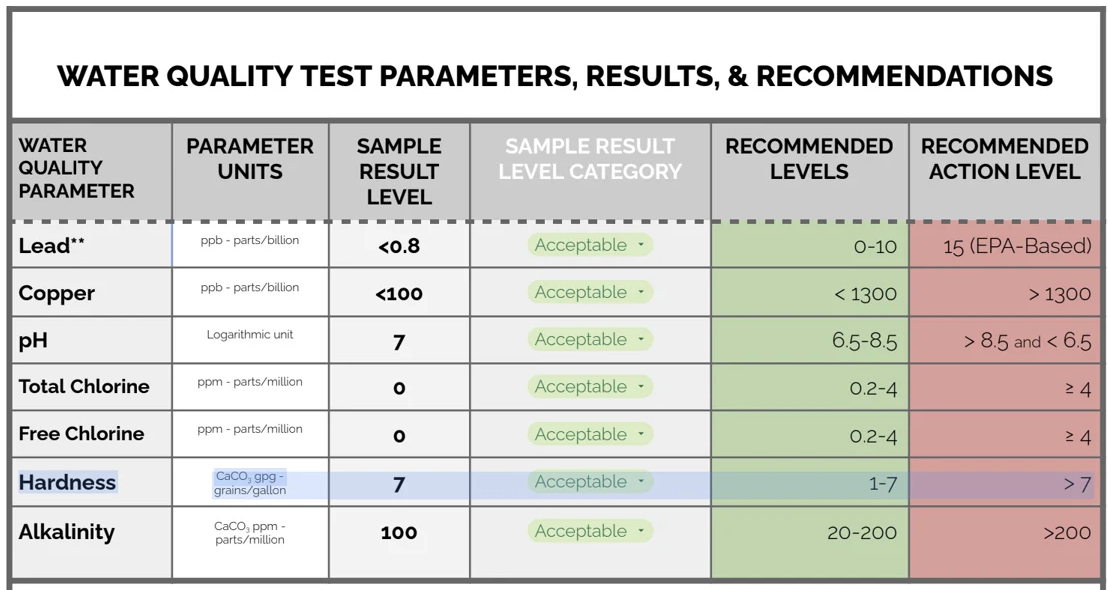
Water hardness is a measure of the concentration of minerals in the water, mainly magnesium and calcium. This can be measured and is one of the test parameters that is included in the ABP Water Quality Test. See the image below for sample results included in the ABP water quality test.  

What is the problem with galvanized steel piping?

Galvanized steel water supply piping was a commonly used plumbing material from the 1880’s-1960’s. Initially used as an alternative to lead pipes, it was later learned that galvanized pipes heavily rust and corrode from the inside outward as the zinc coating wears off. In addition to failing and leakage, lead can also be introduced into the water supply from the galvanizing process. The expected service life of galvanized steel plumbing is around 60 years, so all galvanized steel plumbing is theoretically due for replacement by now.

What is Polybutylene plumbing and why is it a problem?

Polybutylene plumbing is a type of plastic resin water pipe that was a cheap and easy alternative to copper and was manufactured from 1975 to 1995. Polybutylene was banned in 1995 due to failure of pipes in the form of leaking and rupturing. Polybutylene is generally identified by its gray color with blue lettering usually stamped with “PB2110” and should be evaluated for replacement by a qualified plumbing contractor.

What Are the 2 Most Common Radon Testing Myths?

Myth 1 - Only homes with a basement can have high radon levels.


This is false. If the levels of radon in the soil are high enough, any home can have high radon levels whether or not the home is on a basement, crawlspace or slab foundation. 

Myth 2 - The home has a mitigation system already installed so testing isn’t necessary.


This is also false. It’s true that a home with an active and properly functioning mitigation system is less likely to have high radon levels, but it’s important to confirm that the system is working properly. We perform many radon tests on homes with systems that come back with levels over 4pCi/L.